
What the Data Center Boom Means for Washington Local Governments
August 3, 2026
by
Leonard Bauer
Category:
Development Regulations and Zoning
,
Land Use Administration
,
Rural Uses
,
Artificial Intelligence
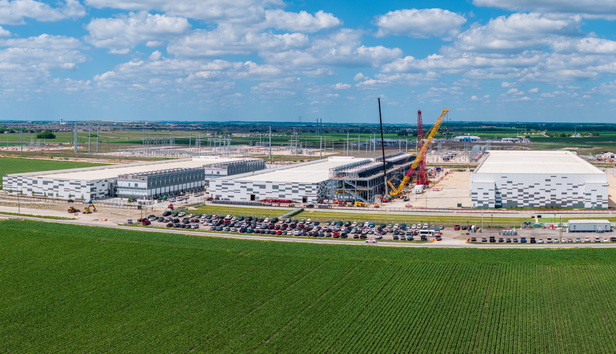
As defined in A Primer for Local Governments Understanding Data Centers, data centers are “facilities that provide critical infrastructure to power modern digital services.”
Depending on the size of infrastructure needed, a data center can range from a room in a building, to a building, to an entire campus. Washington local governments and utilities face major policy challenges as proposals for large data centers increase.
As data centers have become essential to serving the growing demand for internet services, cloud computing, video streaming, gaming, artificial intelligence (AI), and many other digital services, the need to develop and locate new centers has grown (as has the need to build larger, campus-style data centers).
But such facilities can have a negative impact on local electricity and water services, utility rates, land use, and air quality, as well as introduce heat, noise, and light pollution into neighboring communities.
For some, data centers have become a visual symbol of the use of AI and the power of large tech companies, and city and county permit processes provide a rare opportunity for residents to voice their concerns about these trends.
This blog is part of a two-part series on issues that local governments and utilities face when large data centers are proposed. Part One summarizes some of the benefits and costs to local governments from data centers, and how state policy is evolving.
Why So Many Data Centers?
Since the advent of digital services there has been a need for storage and processing of data. As this need grew, so did the need for larger numbers of computers and servers with greater capacity. Over time, centralizing these servers became a more efficient way to provide digital services.
Data centers have occupied buildings in Washington for many years. Local governments typically have not specifically defined them in their zoning codes, considering them to be a permitted use in commercial or industrial areas. Most have been small to mid-sized data centers, and their presence in local communities has typically raised little concern while bringing some economic benefits.
As digital services have grown to be a significant part of our everyday lives, some data centers have grown to meet the need. In the past decade, demand for enterprise digital services and AI applications has driven technology companies to invest in huge data center campuses, particularly in locations where adequate electrical transmission is available and relatively inexpensive. A July 2026 inventory of large data centers shows 29 operating in Washington and 10 additional planned.
Benefits and Costs of Data Centers
Data centers have generated large tax windfalls for some communities; for example, reportedly paying about 75% of Quincy’s property tax revenue (which the city used to fund new public amenities and infrastructure improvements).
According to a December 1, 2025, preliminary report from the state Data Center Workgroup, Quincy’s property tax levy rates have declined from $3.12 per thousand in 2006 (before data centers) to $0.87788 per thousand in 2025. The report identified similar property tax benefits in Douglas County from a cluster of data centers near East Wenatchee. Similarly, a 2025 Ernst & Young report found broad economic benefits from Microsoft’s data centers in Grant, Douglas, and Chelan counties.
Data centers provide large numbers of construction jobs during the development phase and some ongoing employment opportunities after a site is finished. For example, Puyallup’s Centeris Data Center employs 21 full-time employees and an additional 50-100 employees from third-party vendors to maintain its equipment.
The Data Center Workgroup’s preliminary report found that data centers are the largest source of expected electricity load growth in the Pacific Northwest and have significant impacts on existing electricity resources and transmission systems. The workgroup also noted that meeting their growing need for electricity may affect the state’s long-term clean energy goals.
Additionally, data center campuses use large amounts of water for their cooling systems and concerns have been raised about their potential effects on air and water quality.
Data centers also require supporting facilities that may impact local communities, such as:
- water and transportation facilities;
- electric facilities, such as transmission lines and substations; and
- storage facilities, including large solar farms and battery energy storage systems (BESS).
Siting these support facilities can be challenging and local governments should examine their potential impacts carefully. For example, King County recently adopted new regulations for BESS facilities, and a number of cities have adopted temporary moratoria on BESS facility development, including Snoqualmie, Covington, Black Diamond, Maple Valley, Enumclaw, Renton, Auburn, and North Bend, to study their potential impacts.
State Policy on Data Centers
States around the country have taken different approaches to incentivizing and regulating large data centers. As of 2025, 37 states offered data centers tax exemptions. In contrast, New York recently passed a statewide moratorium. Tribal nations have also taken a variety of approaches toward data centers.
Washington offers a sales tax exemption for qualifying businesses and tenants that operate data centers in most Washington counties. The exemption includes purchases of eligible server equipment used in data centers and the power infrastructure to serve them. However, with the passage of SB 6231 in 2026, this exemption no longer applies to replacement and refurbished equipment for data centers.
Executive Order (EO) 25-05 created the Data Center Workgroup to evaluate the impacts of large data centers on the state, from job creation and tax revenue to energy use and environmental impacts. The EO directed the workgroup to consider policies that balance industry growth, tax revenue needs, energy constraints, and sustainability.
The workgroup released a preliminary report last December and will issue a final report once their tribal consultation process is completed. Among the preliminary report’s findings:
- The state’s data center industry directly and indirectly contributed $1.8 billion to state and local tax revenues in 2023, the last year data was available. This is net of tax exemptions, which were estimated to total over $118 million.
- The data center industry contributed 8,990 direct jobs in Washington in 2023.
- Potential growth in large data centers in Washington would require significant electric power grid expansion, including generating resources, substations, and local and regional transmission capacity.
- These large additional loads may present risks for other utility customers in the form of higher rates.
- The direct water requirements of data centers can be substantial, depending on the size and type of cooling system used. This can affect water availability and water quality (through discharges of pollutants and effects on water temperatures).
- The use of fossil fuels to power data centers, particularly their cooling systems, can affect air resources.
- Data center developers and operators have procured and constructed many times more clean energy resources than the state’s utilities. Large tech companies have more capacity to invest in emerging clean energy technologies and may also have additional capacity to invest in improving the region’s energy grid.
As noted in the workgroup's preliminary report, the Northwest Power and Conservation Council has projected that data centers and chip fabrication could add 2,200 – 4,800 average megawatts of electricity load by 2030. However, the consolidation of data processing in large data centers has improved power use efficiency.
While there is broad consensus that utility regulators and governing boards have tools to manage potential impacts on other retail customers, workgroup members disagreed over whether these tools are sufficient. (The data center industry says it is committed to paying the full cost of service.)
House Bill 2515, which was debated during the 2026 legislative session, would have required utilities to create tariffs or contracts that make large energy users pay the full cost of serving them while also taking steps to improve transparency around their energy and water use. While it did not pass, the debate about the appropriate level of state action on this issue will likely continue into the 2027 legislative session.
Data Center Considerations for Local Communities
For cities and counties, data centers are not just an industrial or economic development question. They present a broad set of challenges and issues involving utility governance, climate policy, finance, water stewardship, growth management, and public trust. To take time to study these interconnected issues, several cities and counties have adopted moratoriums on new data center development, including Burien, Federal Way, Marysville, Renton, Moses Lake, Seattle, Skagit County, Snohomish County, and Spokane.
Part Two of this blog series will describe planning and regulatory approaches that local governments have taken to address data center development, as well as some long-term issues to consider. MRSC will also be hosting Preparing for Large Data Centers: Insights from Local Governments on Tuesday, August 25 from 10 - 11:30 AM. This webinar will offer a deep dive on data centers and look at how selected Washington cities have hosted or considered data center projects.
MRSC is a private nonprofit organization serving local governments in Washington State. Eligible government agencies in Washington State may use our free, one-on-one Ask MRSC service to get answers to legal, policy, or financial questions.

About Leonard Bauer
Leonard Bauer has over 35 years of public service experience in planning and community development.
He worked for MRSC from 2024 through fall of 2026 as a planning consultant. Prior to that he was the community planning and development director for Olympia for 10 years. He also served the Cities of Sumner and Tumwater, a regional council of governments in Eugene, OR, and the Washington State Growth Management Services Office at the Department of Commerce.
Leonard is writing as a guest author. The views expressed in guest columns represent the opinions of the author and do not necessarily reflect those of MRSC.


