
Easements
Overview
An easement is an acquired, nonpossessory interest in land owned by another party. Another way to think of an easement is as a privilege or right, distinct from ownership, to use the land of another in some specified way. Local governments can obtain easements in a variety of ways, including through dedication as part of the development approval process, through direct negotiation with the property owner and through the eminent domain process.
This page covers right-of-way (the most common easement obtained by local governments), as well as the myriad of other non-right-of-way easements obtained by and granted to local governments. These easements frequently arise in conjunction with a municipality’s public works projects or during the plat approval or building permit process where the municipality recognizes a need for public use of private land for specific municipal needs.
Creating an Easement
If the local government secures the easement through dedication via a building permit, subdivision, or other land use approval process, the agency should be aware of overreach. The dedication must be reasonably related to the impacts caused by the development. We explore this concept on our Property Rights and Regulatory Takings page and Regulatory Takings Court Decisions page.
If the easement is created outside of the development approval process, the property owner may choose to grant the easement for free or may seek compensation. A good method for determining the value of the easement is to secure an appraisal on which the local government can base its offer. The easement can be granted for a set period or in perpetuity. Either way, if the easement is no longer needed, it can be released by recording a release of easement with the county.
Local governments can also establish an easement by prescription. This occurs when there is no official easement document but the local government has met the elements to establish the easement. See Todd v. Sterling (1954).
To establish a prescriptive easement, a local government must show it used the land for 10 years and that the use was (1) hostile to the property owner's rights, (2) open and visible, (3) continuous, (4) along a consistent route, and (5) exclusive. See The Mountaineers v. Wymer (1960).
Common Types of Easements Granted to Local Governments
The most common types of local government easements are right-of-way, utility, or native growth protection easements.
Rights-of-Way Easements
Rights-of-way (ROWs) are the most common type of easement secured by local governments. A ROW is a legal easement, and streets (paved roadways, sidewalks, etc.) are the physical improvements built within that right-of-way.
A single right-of-way might contain a paved street in the middle, sidewalks on the sides, parking strips between the sidewalk and street, and utility lines underground. The main purpose of right-of-way is public travel. But other uses are also allowed, such as water mains, gas pipes, and telephone lines, when they do not conflict with travel. See State ex rel. York v. Walla Walla County (1947).
Cities, towns, and counties commonly receive rights-of-way designations through the land use permitting process. For example, see Bainbridge Island Municipal Code Ch. 12.30 – Street Dedications. Sometimes, the municipality will own the property on a public right-of-way. Usually, however, the property owners next to the street own the property, which usually goes to the centerline of the right-of-way, and the municipality has secured the easement for public travel. See Rowe v. James (1912) and Kiely v. Graves (2012).
Property owners can use or develop ROWs for their own purposes only if these purposes do not interfere with public travel on or through the easement. See Nystrand v. O'Malley (1962).
Statutes
Municipalities manage and regulate rights-of-way under the Washington State Constitution (Article XI, Section 11) and these statutes:
- RCW 36.75.050 (counties)
- RCW 35A.11.020 (code cities)
- RCW 35.22.280(7) and (8) (first class cities)
- RCW 35.23.440(33) (second class cities)
- RCW 35.27.370(4) (towns)
Municipalities can also allow other uses of rights-of-way, including private uses, that do not significantly interfere with public travel. See Winkenwerder v. City of Yakima (1958). These uses are granted through the city, town, or county's right-of-way permitting process.
For more information about public right-of-way permitting, see MRSC’s page Right-of-Way Use Permits.
If a right-of-way has not been opened and improved, the property owner can use it like they would the rest of their property. However, they may have to stop using it if the right-of-way is opened and improved in the future. See Thompson v. Smith (1962).
Municipal Duties Regarding ROWs
Municipalities must take care when building, repairing, and maintaining public streets to keep them reasonably safe for normal travel. See Keller v. City of Spokane (2002). If the city, town, or county knows about a dangerous condition in the street or road, such as a pothole (see figure 1), and has reasonable time to fix it but does not, it could be liable for damages. See O'Neill v. City of Port Orchard (2016) and Nguyen v. City of Seattle (2014).
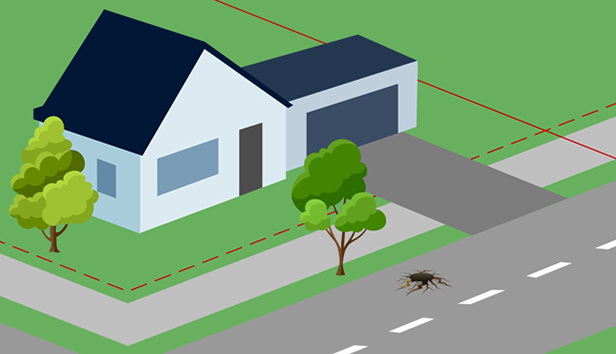
Figure 1: A pothole occurring in a street.
See MRSC’s page City Street and Road Standards for examples of common road standards.
For sidewalks, municipalities can pass local codes requiring property owners next to sidewalks to maintain them. But the municipality still has a general duty to maintain sidewalks if it knows about a problem and has reasonable time to fix it. See Birdsall v. Abrams (2001) and Millson v. City of Lynden (2013). However, property owners can be liable if they cause or contribute to sidewalk problems. See Stone v. City of Seattle (1964).
For more on municipal obligations to maintain streets, see MRSC's page on Sidewalk Construction, Maintenance, and Repair.
Outer Edges of Right-of-Way
Most rights-of-way are 60 feet wide, but street improvements often do not take up the whole width. The outer edges of the right-of-way may be used by property owners in any way that does not conflict with the public easement for street purposes. See Nystrand v. O'Malley (1962). But permanent structures or retaining walls are likely not allowed. See Thompson v. Smith (1962).
Some jurisdictions allow fences in the fringes of rights-of-way (see figure 2). However, some cities, such as Shoreline, require permits for building along or inside a ROW.
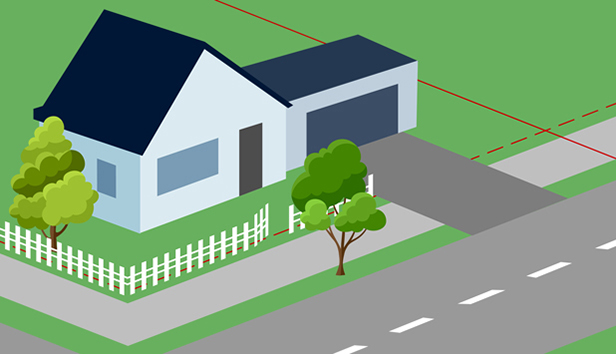
Figure 2: A fence beyond the property line.
Street Trees and Parking Strips
Many cities and counties require property owners to plant and maintain street trees when they develop their property. Municipalities also often regulate trimming and maintenance of street trees and require permits to remove them. See Shaw v. City of Yakima (1935). Further, if a property owner plants trees that cause root damage to a sidewalk, the owner can be liable for sidewalk damage and injuries (see figure 3). See Rosengren v. City of Seattle (2009).
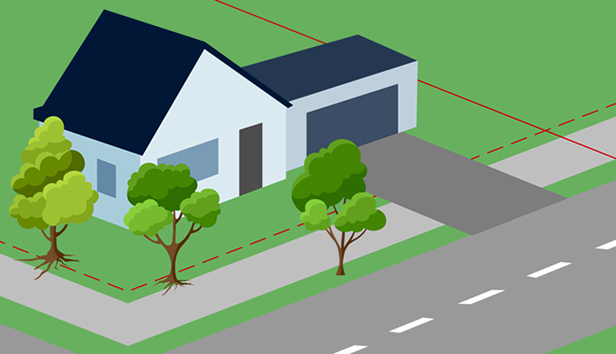
Figure 3: Tree roots cracking the sidewalk in a ROW.
Further, municipalities can also be liable for roadside greenery that block sight lines, even if the plants are not in the roadway (see figure 4). See Wuthrich v. King County (2016).
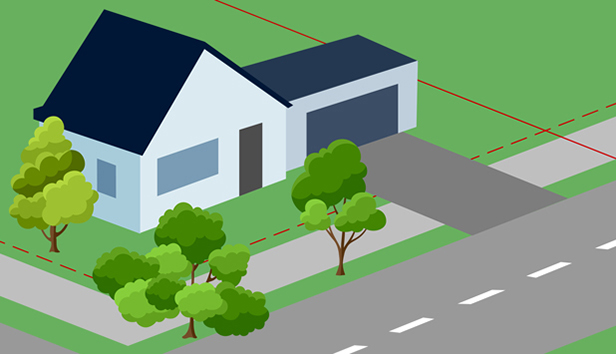
Figure 4: Roadside vegetation creating sight obstructions for right-of-way users.
Parking strips often have utility poles, fire hydrants, and landscaping. While people may walk on parking strips, they do not need to be maintained in the same condition as sidewalks. See Hoffstatter v. City of Seattle (2001).
For more information, see the section “Street Trees and Sidewalk Damage” on MRSC's Urban Forestry page.
Vacating a Right-of-Way
A right-of-way easement can only be removed through the street and road vacation process. Vacating a ROW means a local government gives up its use, control, and maintenance obligations. Some old county roads and streets are automatically vacated (RCW 36.87.090). See Gillis v. King County (1953).
When a right-of-way is vacated, the property goes to the property owners on each side, half to each (RCW 35.79.040).
For more information, see MRSC’s page Street and Road Vacation Procedures.
Utility Easements
Local governments secure utility easements for a variety of purposes including for installation and maintenance of the municipal utility infrastructure related to sewer, drainage, and stormwater.
It is common for local governments to obtain a declaration of covenant and grant of easement in the same document, in which the parties agree to engage or refrain from certain action (the “covenant”) and the property owner permits the local government the right to use the land to maintain, repair, and otherwise work on the utility infrastructure located on the private property (the “easement”).
Common terms included in utility easements are:
- A right-of-access that details the local government’s ability to access the easement property to inspect, maintain, repair, and otherwise use the easement area for the granted purpose;
- A requirement that the easement runs with the land and applies to successors in interest; and
- An obligation to restore the surface of the easement area to match the area’s existing condition prior to the local government’s work in the easement area, as nearly as practicable.
Below are selected examples of utility easements:
- Dupont Easement for Utilities (2011) – Template for grantor to grant non-exclusive easement for underground water/storm drainage utilities. Grantor must obtain written consent before planting trees or installing any other pipes or structures within easement; city will not damage the property.
- Kitsap County Sewer Easement (2020) – Template for grantor(s) to grant a sewer utility easement. Private improvements within the easement shall not be disturbed or destroyed, or if they are, they will be replaced.
- Pierce County Storm Sewer Easement (2021) – Template for grantor(s) to grant a utility easement for storm sewer infrastructure. County is not responsible for replacing or restoring landscaping, fences, or other items that may be damaged in the process.
- Shoreline Declaration of Covenant and Grant of Easement for Stormwater Facilities and/or BMPs (2018) – Template for grantor(s) to grant a utility easement for stormwater facilities and/or best management practices. City must provide advance notice of repair work; grantor must receive approval prior to altering stormwater facilities. City will restore ground surface.
Native Growth Protection Easements
Local jurisdictions use various instruments to establish native growth or critical area protection areas to protect critical areas and their buffers from development impacts. Local governments often adopt this protection in the critical areas chapter of their municipal code.
For example, the City of Renton requires that certain development proposals create a separate native growth protection tract in the subdivision and record a covenant or deed restriction protecting the tract from development. Renton Municipal Code 4-3-050G(3) also provides the option to record a conservation or protective easement to ensure protection of the critical area and its buffer.
Snohomish County also has a robust program for establishing native growth protection areas.
Common Types of Easements Granted by Local Governments
Requests for use of right-of-way proceed through the right-of-way use permitting process. Requests for use of non-right-of-way, publicly owned property can be conveyed through an easement and can come from private individuals, businesses, or utilities (for example, for an access easement to provide a cable connection to a cable customer or an access easement to access a property owner’s otherwise inaccessible parcel).
Only the governing body (such as the city council or county commission) has the authority to convey an easement, although this authority can be delegated to the executive or department head through adoption of a policy, ordinance, or resolution. For example, see:
- Maple Valley Resolution No. R-19-1394 (2019) – Delegating signature authority to city manager to execute an easement to a water and sewer district for operation and maintenance of a sanitary sewer line at a city park.
If the local government conveys an easement to a private party, it should require compensation for the conveyance so there is no violation of the gift of public funds prohibition.
Releasing an Easement
If the local government no longer needs an easement, the process for releasing (extinguishing/ vacating) the easement will depend on whether it was dedicated on the face of the plat (i.e., the map showing the decision of land into lots and the streets, alleys, dedications, easements, etc.) or if it was granted through a stand-alone document. Our subdivisions topic page offers more information on plats.
A local government is required to follow the process for plat alteration pursuant to RCW 64.04.175 to release an easement dedicated on the face of a plat. See M.K.K.I., Inc. v. Krueger (2006), which held that an easement depicted on a short plat could only be extinguished by formally amending the plat.
To release an easement granted independent of a plat, the legislative body will simply take action to extinguish the easement. One option is for the local government to follow its surplus property procedures, although this is not required. Note, however, RCW 35.94.040 provides that a city can only release a utility easement after it holds a public hearing and adopts a resolution declaring the easement surplus to the city’s needs and no longer required for public utility purposes.
For more information on surplus requirements, see our pages Surplus City or Town Property, Surplus County Property, and Surplus Property for Special Purpose Districts.
Regardless of whether the easement was released by altering the plat, by simple action of the legislative body, or after a public hearing and adoption of a resolution, the local government should record a release of easement with the county to provide a clear chain of title.
Releasing right-of-way can only be accomplished through the street or road vacation process.


