
U.S. Supreme Court Changes Law on Government First Amendment Liability for Social Media Activities
April 8, 2024
by
Harry Boesche
Category:
Court Decisions and AGO Opinions
,
Social Media

The U.S. Supreme Court (Court) recently decided Lindke v. Freed. The case changes Washington law regarding government social media liability and has important implications for local government officials and their agency employers.
Lindke addressed whether a public official violates the First Amendment by deleting or blocking public responses to job-related comments the official posts to their personal social media account. Lindke holds that public officials are only liable for social media First Amendment violations when the official:
- has actual government speaking authority on the involved social media topic; and
- uses that actual speaking authority in the involved social media exchange.
Lindke overturns the Ninth Circuit Court of Appeals Garnier v. O’Connor-Ratcliff decision (vacated and remanded by the Court due to Lindke), which was previously Washington’s leading case on this topic.
Unlike the Lindke ruling, Garnier had held that public officials are liable for violating commentor’s First Amendment rights if the official’s social media activity created even an appearance of government speaking authority. Lindke’s ruling now requiring actual speaking authority before an official can be found liable provides clear guardrails for both public officials and local governments.
A Background of the Problem
Local governments and officials (including mayors, city councilmembers, district commissioners and other officials) frequently use social media to disseminate information and to respond to public concerns or requests. Given social media’s popularity and effectiveness, this is unlikely to change and will likely only continue and increase.
However, public officials’ social media use also creates legal issues since government social media can create a public forum impacting public First Amendment rights. Public officials who delete or block public comments on government-hosted social media platforms limit the public’s access to this forum and, accordingly, may be liable for a First Amendment violation through “state action” under federal law (42 U.S.C. §1983). Since many agencies cover their officials’ job-related liabilities, an official’s liability can become the agencies’ also.
Governments agencies that own and control their social media platforms can navigate these legal issues more easily. Things get tougher when public officials discuss job-related matters on their personal social media sources, as it gets harder to tell when the official is speaking and acting officially (and subject to First Amendment liability) and when the official is free from such liability by speaking and acting personally. The obvious question becomes: When is an official’s personal social media use “job related,” creating this potential First Amendment liability?
Lindke answers this question and changes previous Washington law in the process.
The Lindke Case
The Lindke case involved Port Huron (MI) City Manager James Freed using his personal (but publicly open) Facebook account to post both personal and job-related comments about the COVID-19 pandemic. Freed’s personal posts related to changes in family activities during the pandemic, while his job-related posts described his city’s hiring freeze and included a city press release. Port Huron resident Kevin Lindke responded to Freed’s account posts, complaining about the city’s overall pandemic response and criticizing specific actions of city leaders during the pandemic. Freed deleted Lindke’s comments and later blocked Lindke from commenting altogether.
Lindke sued Freed in federal court, claiming that Freed’s social media blocking violated Lindke’s First Amendment rights through state action under 42 U.S.C. §1983. The Court held that a public official’s social media activity is state action under 42 U.S.C. §1983 only if the official meets both of these two requirements:
- The official had the government’s actual speaking authority on the specific social media topic involved. Whether an official has this actual government speaking authority is fact-specific and can’t be determined by an official’s government employee status alone. Instead, an official’s government speaking authority depends on the specific responsibilities that an agency has entrusted the official to perform.
- The official used their actual government speaking authority in the involved social media activity. An official with actual government speaking authority uses it when they use social media to speak in their official capacity or to further their official or legal responsibilities.
Officials and agencies cannot be found liable for First Amendment violations for social media use falling outside of this actual and used authority. The Court also noted that social media accounts labeled “personal” are entitled to “heavy presumptions” that posts to the account are personal and not attributable to the government. Likewise, an official’s social media communications that merely repeat or share already publicly available information are more likely personal than official.
How Lindke Changes Washington Law
Before Lindke, the Ninth Circuit Court of Appeals Garnier case regulated Washington in the question of public official First Amendment liability for social media use.
Garnier involved two school district trustees using Facebook and Twitter (i.e., X) accounts to communicate with constituents about district issues. The trustees blocked unfavorable comments posted to the accounts by two district parents. The parents sued, arguing that the trustees’ comment blocks were state actions infringing their First Amendment rights and triggering 42 U.S.C. §1983 liability.
In contrast to Lindke, the Garnier court decided the case by focusing on what the trustees’ social media accounts portrayed to the public and how the public reacted to the portrayal. Public officials are only liable for social media First Amendment violations if their social media use is sufficiently and legally connected to their job. Garnier found this legal connection if the officials’ social media activity made the public think that the government authorized it. Lindke finds this connection only when the government has in fact authorized the official’s social media activity.
Takeaways
Lindke’s focus on a public official’s actual authority in determining social media liability under 42 U.S.C §1983 presents a few takeaways. Local governments should:
- create and designate social media accounts for public officials;
- establish clear parameters on an official’s speaking authority; and
- adopt rules to “mark” statements by officials.
Create and clearly designate social media accounts for use by officials
As stated above, the legal pitfalls related to social media use become most prominent when officials use personal accounts for official purposes. Lindke’s heavy presumption that social media statements posted to a personal account indicates that clear designations of account ownership can help navigate questions of government liability for social media activity.
Lindke also noted that the potential for an official’s liability increases when the official fails to confine personal posts in a clearly designated personal social media account. Ensuring that officials have a clear path for “authorized” speaking lessens the temptation of mixing personal and official speech.
Establish clear parameters on an official’s speaking authority
As Lindke noted, an official is only liable for censoring social media posts that are connected to the official’s authority. An official’s authority can be established through formal enactments like ordinances, governing body and department head policies, or from prior practices that create a “permanent and well-settled” recognition of the official’s authority to speak on particular agency matters.
Adopt rules to “mark” statements of officials
In further refining the requirement that officials act pursuant to their speaking authority to be liable, Lindke noted that statements “marking” the parameters of an official’s social media activity (such as: “This is the personal page of…” or “The views expressed are my own”) give the benefit of clear context to meet the heavy presumption in favor of personal statements and against liability. Rules for officials to help them navigate communications can greatly assist in this area.
A note about public records — Lindke does not change the Washington Supreme Court’s interpretation of the Public Records Act and the application of the “scope of employment” test to determine whether activity on a personal social media account rises to the level of being a public record. For more on this topic, see the MRSC blog: New Ruling Finds Facebook Posts Can Be a Public Record.
MRSC is a private nonprofit organization serving local governments in Washington State. Eligible government agencies in Washington State may use our free, one-on-one Ask MRSC service to get answers to legal, policy, or financial questions.
About Harry Boesche
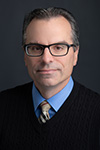
Harry Boesche joined MRSC as a legal consultant in 2024. Prior to this, he was the Deputy City Attorney for the City of Auburn for 17 years.
His municipal law practice includes advising elected officials and appointed board and commission members on public records act and open government issues.


