
The Importance of Public Space to Downtown Revitalization
April 3, 2024
by
Steve Butler
Category:
Design
,
Parks and Recreation Facilities
,
Downtown Revitalization Series

Vancouver's Esther Short Park, photo credit: Steve Butler
Downtowns are the commercial center of most cities, serving as the “heart” for a community and helping define its image. Many downtowns suffered during the COVID-19 pandemic, as people stopped going out in public and many employees shifted to working remotely. This unexpected reduction of workers and visitors had a negative effect on downtown commercial areas that still lingers today, with declining retail activity and increasing office space vacancies.
Recognizing that their downtowns may never return completely to pre-pandemic levels, several communities are adjusting their thinking to this “new normal” for their major commercial centers and, as a result, are looking for successful strategies to increase the vitality and activity levels of these spaces. As many communities strive to bring the public back to their downtowns, it is important to recognize the crucial role that parks and open space can play in making those spaces more welcoming.
Downtown Revitalization and the Importance of Public Gathering Places
A major goal of downtown revitalization is to maintain or expand the economic activity of existing commercial/mixed-use development levels. Parks, plazas, and other types of public open space can serve as a significant economic catalyst by attracting people to your central business district/commercial core.
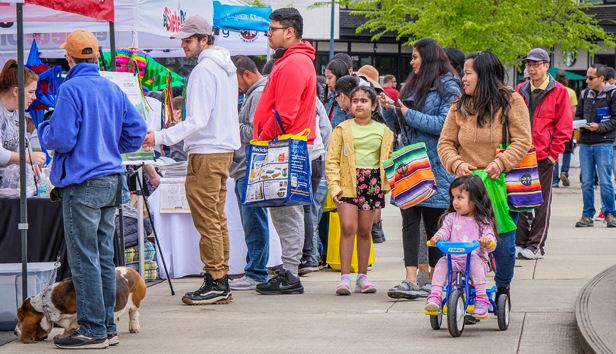
An event at Redmond's Downtown Park. Photo credit: City of Redmond
These public spaces can function as gathering spots to create an authentic sense of place that brings people together, as well serving as areas of calm and respite for visitors and community members alike. Some urban planning experts view public space as being “the glue that connects the physical downtown environment.”
When examining the evolving role of public spaces in economic recovery, with a focus on the post-COVID era, a Brookings Institute study of three cities found that “public spaces play a crucial role in shifting perceptions of downtown areas, inspiring infrastructure improvements, and incubating small businesses.” To use them as a means to draw more people downtown, a concentrated and deliberate effort, along with a financial investment, may be needed to enhance your parks, plazas, and other public open spaces.
Spokane’s Riverfront Park and Vancouver’s Esther Short Park are two classic examples of major downtown parks that have a large variety of amenities and activities to attract people to them.
What Is Meant By the Term "Public Space?"
This blog focuses on types of spaces that are open to the public and help define a downtown’s “public realm,” including public parks, historic “town squares,” plazas, and pocket parks. Washougal’s Reflection Plaza is an example of a publicly owned plaza that is designed to help activate that city’s downtown.
Washougal's Reflection Plaza (see photo below) is an example of a publicly owned plaza designed to help activate that city’s downtown.
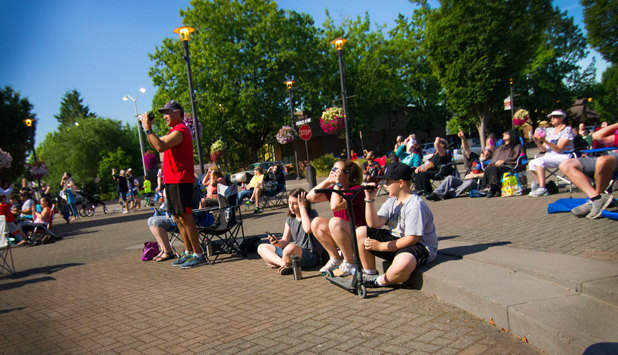
Reflection Plaza. Photo credit: Michele Loftus, City of Washougal
Plazas and pocket parks may be located on either public or private property, the latter of which is often associated with an office, mixed-use, or multi-family residential building.
For downtowns and commercial centers, it is important for privately-owned public spaces (sometimes referred to as “POPS”) to be open and accessible to all members of the public during “reasonable hours,” meaning times of the day when people would normally be working in or visiting downtown.
Because they successfully activate the broader public realm, sidewalks (with space for sidewalk cafes) and parklets/“streateries” (i.e., restaurant seating or retail display areas that occupy curbside parking spaces, usually adjacent to a pedestrian-oriented business using them) should also be a component of a community’s downtown revitalization efforts. While such spaces were vital for many businesses during the pandemic, parklets and streateries continue to bring a high level of liveliness to the pedestrian realm of downtowns and neighborhood commercial districts.

Outdoor dining and streatery in Seattle. Photo credit: Steve Butler
Key Characteristics and Attributes of Successful Public Spaces
A successful public space needs to fundamentally address the following needs:
- Safety — People will congregate where there is a sense of protection against unpleasant or unsafe experiences.
- Comfort — A park, plaza, or other type of open space needs to take human comfort into account, which includes opportunities to sit, relax, and be protected from inclement weather, as needed.
- Enjoyment — Public spaces need to be pleasant and fun places to be, which allow people to experience the space and surrounding areas, passively view nearby activity, and even engaging in active recreational opportunities, in some cases.
As a follow-up to the issue of safety — People need to feel safe and protected within a public space. This does not mean that a security guard needs to be stationed at every park or plaza. Instead, a sense of safety is created by high activity levels, such as areas with busy sidewalks or adjacent buildings that frame the area and have large windows people can see in and out of. The latter condition creates an environment where there are “eyes on the street,” allowing for natural surveillance to occur. More information on natural surveillance and “Crime Prevention through Environmental Design” may be found in my blog: Planners and Police Officers Working Together to Create Livable and Safe Communities.
The three elements listed below are critical for a public space to successfully achieve the above-mentioned goals of safety, comfort, and enjoyment.
Having an enticing and welcoming location
Public spaces flourish when people have a variety of reasons to be there. Redmond's Downtown Park (see photo below) is a good example of a strategically-located (and well-designed) new park that successfully links both the historic and newly developed sections of the city’s downtown.
On the other hand, isolated locations with low pedestrian activity and poor visibility from sidewalks or adjacent buildings will almost aways result in underutilized spaces. People want to feel safe in their public spaces, which they will intuitively sense when it is missing. For more information, see my blog: 3 Ways to Make Your Public Plaza More Successful.
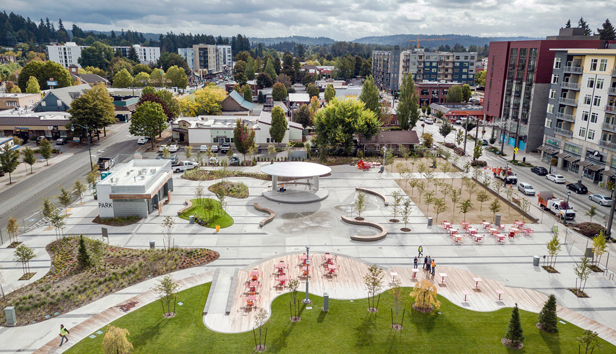
Redmond's Downtown Park. Photo credit: City of Redmond
Using attractive, interesting, and human-focused design
The design of a downtown park or plaza should be appealing and enticing enough to attract people to want to use it. Good lighting (either natural or artificial) and comfortable seating are two key components of any successful open space.

Parklet in Vancouver, BC. Photo credit: Darby Gilligan
Landscaping, both softscape and hardscape, is another important design feature. Natural vegetation, such as trees and groundcover, is often found in an urban park or plaza but isn’t necessarily an essential feature. For example, Mt. Vernon’s Skagit Riverwalk Park has minimal planted vegetation yet is still a greatly used public space (it also has the added, important function of acting as a physical barrier during high floods).
Having high-quality “hardscape” materials (such as pavers and artistic benches) is also important. Public art, water features, and even some recreational options can also contribute to the appeal of public space. For more information, see my blog: 9 Elements of Successful Small Parks and Plazas.

Interactive water feature at Vancouver's Esther Short Park. Photo credit: Steve Butler
Providing programmed activities
Some parks and plazas do not have enough positive characteristics to attract users to a location that doesn’t normally draw visitors. In those cases, it may be beneficial to provide site-specific “play equipment” and to program fun activities that will attract people that space. For example, several of Seattle’s downtown parks provide recreational equipment (e.g., ping pong tables, oversized chess boards, and bocce ball courts) and plan entertaining, programmed activities (such as summer noontime concerts), which helps to activate those public spaces.
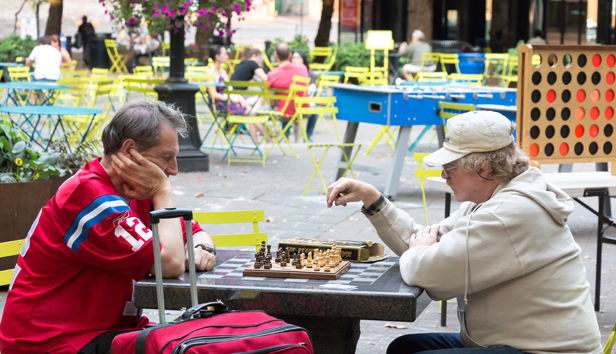
Men playing chess in Seattle's Pioneer Square
Conclusion
It will likely take a few years before downtowns adjust to the post-pandemic “new normal.” In the meantime, cities and towns need to focus on new, innovative strategies they can take to encourage people to visit and use their downtowns. Providing attractive, safe, and enjoyable parks, plazas, and public open space can play an important role in downtown revitalization efforts.
MRSC is a private nonprofit organization serving local governments in Washington State. Eligible government agencies in Washington State may use our free, one-on-one Ask MRSC service to get answers to legal, policy, or financial questions.


