
For Local Fireworks Regulations, Timing is Everything
April 28, 2025
by
MRSC Insight
Category:
Licensing and Regulation
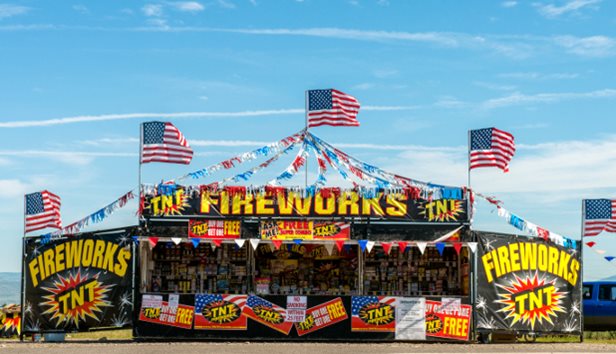
Now that the snow showers and heavy rainstorms are (hopefully) behind us, it's time to start thinking about May flowers and spring gardens, but it is also time to start thinking about next year’s fireworks season. Why would that be? If your community wants to restrict or ban the sale or use of consumer fireworks, such an ordinance must be adopted by June 28 of this year to be effective next year.
This blog looks at why a jurisdiction may want to institute local fireworks regulation — or ban fireworks altogether — and why such action needs to be taken in advance.
Background
RCW 70.77.395 sets the dates and times statewide during which fireworks may be sold as well as used, which is not always concurrent:
- They may be sold and used between June 28 and July 5.
- They may be sold between December 27 and December 31.
- They may be used between December 31 and January 1.
State law also establishes specific hours that fireworks may be sold and/or used for each of those days (see RCW 70.77.395).
A local jurisdiction may adopt legislation that is more restrictive than state law, such as allowing the use of fireworks only on July 4 or banning the sale and use of fireworks completely (though such bans typically include exceptions for permitted public fireworks shows): however, jurisdictions cannot adopt legislation that is less restrictive than state law.
RCW 70.77.250(4) requires that any locally adopted legislation more restrictive than the state's must have an effective date at least one year after its adoption. Thus, if a city, town, or county wishes to restrict the sale or use of fireworks within its jurisdiction in 2026, it must take legislative action no later than June 28, 2025.
Why Restrict Fireworks?
Local governments cite a number of concerns when considering whether to restrict or ban consumer fireworks, including the noise, smells, or trash generated by use of them; the potential for damage to personal or public property; the potential for injuries and/or death; and, of course, the potential danger of fire.
When temperatures are hot and vegetation is dry, the improper use of fireworks can pose a threat to surrounding property. According to the National Fire Protection Association, fireworks caused an estimated 31,302 fires in 2022 in the United States, resulting in ”6 civilian deaths, 44 civilian injuries and $109 million in direct property damage.” The 2017 Eagle Creek Fire, which burned almost 50,000 acres in and around the Columbia River Gorge over a three-month period is one such example of a destructive event started by fireworks.
Personal safety is another concern. Each year the U.S. Consumer Products Safety Commission puts out a report on fireworks-related deaths and injuries. The 2023 Fireworks Annual Report estimates that 66% of fireworks-related injuries treated in hospital emergency departments nationwide happened between mid-June to mid-July of that year.
But there are also reasons why people oppose fireworks restrictions and bans. Fireworks are celebratory and traditional and help bring families and communities together. Also, the sale of fireworks can represent a significant source of revenue for a community.
Some people believe that fireworks bans are ineffective: Even if a local jurisdiction bans fireworks completely, consumers may be able to buy fireworks in other nearby jurisdictions that have less restrictive laws or on tribal lands that are not subject to state fireworks laws. Further, enforcement of bans may be difficult since the actual use of fireworks may occur outside the immediate view of police officers, and, finally, enforcement of firework regulations interferes with the ability of police and fire officials to enforce other laws.
Whether or not to impose local fireworks restrictions is not an easy decision for a local government to make.
Are Emergency Bans Possible?
Although certain summers are hotter, drier, and more prone to wildfire than others, it is not clear whether local governments have the authority to impose an immediate fireworks ban without the statutory one-year waiting period, no matter how dangerous local environmental conditions may be.
Some local governments have adopted ordinances or codes that authorize specific officials — such as a mayor, county executive, sheriff, or fire marshal — to prohibit fireworks during emergency conditions (find sample codes and bans on the Fireworks Regulation webpage).
While RCW 70.77.250(4) does not impact the ability of local governments to adopt emergency restrictions or bans in response to extreme heat, drought, or other circumstances that would make the discharge of fireworks unreasonably dangerous, local governments should consider the possible legal risks of enacting such a measure since there is no clear law either way on this question.
What Does the Public Think?
Given the various arguments both pro and con, does the public support fireworks bans? The answer may vary in different places and contexts. According to our Local Ballot Measure Database, over the past five years Lake Stevens, Long Beach, Pacific County, Stanwood, and Yelm have all asked their voters to weigh in through advisory votes on whether to ban the sales or discharge of fireworks within their jurisdiction. Of the five, a majority of voters in Yelm and Lake Stevens opposed proposed fireworks restrictions while a majority of voters in Long Beach, Pacific County, and Stanwood approved of such restrictions.
For More Information
Several local governments have recently looked at adopting bans or making changes to existing fireworks regulations, including Sequim, North Bend, Mount Vernon, Mercer Island, and Snohomish County.
Our Fireworks Regulation in Washington State webpage provides an overview of fireworks laws, including information on permitting and licensing, dates and times fireworks may be sold or discharged, and examples of local ordinances. Additionally, if you have any specific questions regarding fireworks regulation, you can Ask MRSC.
MRSC is a private nonprofit organization serving local governments in Washington State. Eligible government agencies in Washington State may use our free, one-on-one Ask MRSC service to get answers to legal, policy, or financial questions.


