
Closing the Blinds: New Public Records Act Exemption Limits Disclosure of ALPR Data
April 20, 2026
by
Sarah Doar
Category:
Law Enforcement
,
New Legislation and Regulations
,
Law Enforcement Records Disclosure
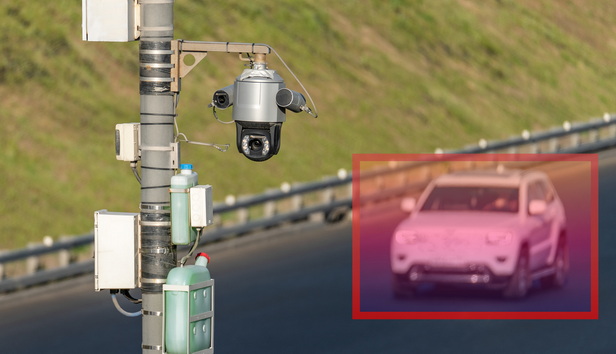
As I mentioned in PRA 2025 – A Year in Flux in January, we have been watching the progress of SB 6002 (aka “The Driver Privacy Act”) in the Washington State Legislature, which addresses the use and disclosure of Automated License Plate Reader (ALPR) data, the most common vendor being Flock Safety. The bill moved rather quickly through the legislature and was signed into law by the governor on March 30, 2026.
In this blog, I am going to explore the new law’s exemption for ALPR data under the Public Records Act (PRA). SB 6002 creates an entirely new chapter in Title 10 of the RCWs, but we are still waiting for the Code Revisor to assign a statute number to these provisions. For the time being, I will refer to the new law as “Laws of 2026, Chap. 239” and to specific sections of the law.
Please note that what follows is my own analysis of the new law and not legal advice. If you are a records officer trying to determine how this new law applies to your agency, you must seek the legal advice of your agency attorney.
A Quick Review of ALPR Systems
As defined in Section 2, paragraph 4 of the new law, ALPR systems are software or computer algorithms that work with mobile or fixed automated cameras to convert images of license plates into computer-readable data. Such systems not only read the license plate but also capture other identifying details of the vehicle.
ALPR systems have become quite sophisticated, making it possible to pinpoint a vehicle as it moves through the road network and even allowing law enforcement to place a vehicle of interest on a ‘hot list’ and receive email or text notifications whenever it is picked up by a camera in the system. It has been successfully used to recover stolen vehicles, find at-risk children and adults, and identify persons of interest in the area of criminal activity.
The ALPR systems collect a lot of data, often retaining it for 30 days or more. However, little of that data is actually used, accessed, or downloaded by law enforcement.
By definition, the new law does not apply to other types of automated cameras that may collect license plate information, including photo toll system cameras, school bus safety systems, speed safety camera, and automated traffic safety cameras that do not interact with an ALPR system. But it is noteworthy that these systems already have statutes that address the use and disclosure of that information. This new law closes some potential loopholes that ALPR data seemed to fall into.
What Is the New Exemption?
In Section 5, the new law prohibits agencies from disclosing any ALPR data except as required in a judicial proceeding. Paragraph 5 of the section provides:
Automated license plate reader data is not subject to disclosure under the public records act, chapter 42.56 RCW, except such data may be used for bona fide research as defined in RCW 42.48.010 and does not include individually identifiable information.
In Section 2, paragraph 3, “automated license plate reader data” is defined as:
all data collected by automated license plate reader systems including, but not limited to, global positioning system coordinates, location, date and time, speed of travel, photograph, license plate number, automobile characteristics, or other identifying information. [Emphasis added by author]
It also includes body-worn and dash camera audio and video, to the extent this data has been converted and inputted into an ALPR system. It excludes what is defined as “audit trail data,” which includes information about who accesses or uses the system, and how and when the system is accessed or used. The phrase “audit trail data” does not include ALPR data, but it does include “audit reports” generated by the ALPR system as well as data associated with agency self-audits. See Section 8.
In the most straightforward scenario, the ALPR exemption applies to all the data within the ALPR system associated with a specific vehicle. Further, to the extent that ALPR data appears in “audit trail data,” it should be redacted. Section 8, paragraph 2 states that any data elements retained in the audit trail “that contain unique identifiers must be partially redacted in any public disclosure.”
But what about ALPR data that has been used or downloaded by an agency? Or data included in push email and text notifications that a vehicle of interest on a ‘hit list’ has shown up on a camera within a law enforcement officer’s jurisdiction? The way the definition is drafted to apply to discrete pieces of information collected by the system, I believe that exemption follows the collected data wherever it is subsequently disseminated.
So, if discrete pieces of identifying information collected by the system appear in ‘hit’ emails or texts, or investigative data pulls, even prior PRA productions, etc., this exemption likely applies—but only to those unique pieces of collected data. I do not believe it can be relied upon to withhold entire emails or reports, etc. See RCW 42.56.210 (Exemptions do not apply to the entire record if the protected information can be deleted.).
What if a law enforcement officer views the data in the ALPR system and then writes about the data in an investigation report? In other words, what if the collected ALPR data is not auto populated or downloaded into another law enforcement database or report system?
On one hand, it would seem that the privacy protections for this information should follow it wherever it goes. On the other hand, exemptions are required to be interpreted narrowly in favor of disclosure, and folks could argue that the exemption for “ALPR data collected by an ALPR system” applies to just the discrete digital bits of electronic information and not the concepts described by those digital bits and subsequently written by a human elsewhere. I am afraid I do not have a clear answer for this scenario and encourage agencies to consult with their legal advisor.
Please note that if a request specifically seeks the ALPR data retained in the ALPR system and not otherwise previously extracted or used by the agency, I do believe it is sufficient to ‘withhold’ the ‘entire record’ of the data in the system without the need for any kind of individualized redactions. (In other words, you should not have to download ALPR data your agency never used, only to then ‘redact’ that data.)
Practice Tip: Until the Code Revisor assigns a statute in Title 10, the exemption can be cited as “Laws of 2026, Chap. 239, sec. 5, para. 5” along with RCW 42.56.070 (the provision to cite when relying on an “other statute” for an exemption outside of Chapter 42.56 RCW).
What Is the Effective Date? Does It Apply to Pending PRA Requests?
Section 14 of the new law states that it is “necessary for the immediate preservation of the public peace, health, or safety, or support of the state government and its existing public institutions and takes effect immediately.” Because the governor signed the bill on March 30, 2026, the new law went into effect on that date.
Does the new exemption apply to any pending public records act requests? Based on my analysis (detailed below), I believe it does.
The Washington Supreme Court (WaSCt) has previously addressed the question of whether a newly enacted exemption applies to pending PRA requests in SEIU Local 925 v. Dep’t of Early Learning (DEL: 2019). In that case, the WaSCt emphasized that submission of a PRA request does not create a vested right to examine responsive records, so the state legislature “has the right to frustrate a pending PRA request.”
However, whether a new law does in fact “frustrate” a pending request depends on the language of the new statute itself. This requires looking for what the WaSCt calls the “triggering event” in the statutory language.
In the DEL case, the language of the statute explicitly “prohibits the release” of certain records. The WaSCt found the triggering event to be “the release” of records, and therefore, the new amendment could be applied to prohibit the release of records in pending public records requests.
More recently, the Court of Appeals, Division 1 reached a similar conclusion in Wa. Education Assoc. v. Wa. Dep’t of Retirement Systems (2022). That court applied the WaSCt decision in DEL to find a new exemption that stated certain employment information is “exempt from public inspection and copy” meant that the triggering event for the new law was the “public inspection and copying”—not the submission of a PRA request.
In both cases, the courts noted that the state legislature did not “carve out an exception for pending PRA requests.”
I believe that the statutory language that ALPR data is “not subject to disclosure” is similar enough to “prohibits the release” and “exempt from public inspection and copy” from the other cases to conclude that the triggering event in the new statute is the “disclosure” (i.e., release) of records, such that it can be applied against pending PRA requests. Further, like the other two cases, there is no carve out for pending PRA requests.
This conclusion is also supported by the legislature’s intent as stated in Section 1 of the new law:
The legislature finds that it plays an important role balancing the need to ensure public safety and an individual’s right to privacy under both the federal Fourth Amendment to the United States Constitution and the broader protection of individual rights guaranteed by Article I, section 7 of the Washington State Constitution.
In other words, there is an immediate need to protect individuals’ constitutional rights to privacy, and the exemption should be interpreted to immediately protect against disclosure that would invade this right.
Is There a Penalty for Improper Disclosure of ALPR data?
While the PRA provides some liability protection for the good faith disclosure of public records under Chapter 42.56 RCW (see RCW 42.56.060), the new law does contain separate penalties that may override that protection. Any person that willfully shares or disseminates ALPR system data in violation of the new law is guilty of a gross misdemeanor. See Section 10.
A person injured by a violation of the chapter may bring a civil action to recover all appropriate relief, including monetary damages. See Section 11.
What’s Next?
SB 6002 also contains many other provisions limiting the use and retention of ALPR data, which my colleague, Harry Boesche, will write about in a separate blog, so keep an eye out for that.
Additionally, Section 7 directs the attorney general to develop and publish model policies for the use of ALPR systems, which an agency that uses an ALPR system must consider when adopting their own policies. Those local policies, due for adoption by December 1, 2027, should probably make reference to the new exemption and direct staff to redact the information before records are disclosed.
MRSC is a private nonprofit organization serving local governments in Washington State. Eligible government agencies in Washington State may use our free, one-on-one Ask MRSC service to get answers to legal, policy, or financial questions.

About Sarah Doar
Sarah Doar joined MRSC as a legal consultant in September 2018. Most recently, she served as a Civil Deputy Prosecuting Attorney for Island County and prior to moving to Washington, Sarah practiced land use, environmental, and appellate law in Florida for over eight years.
At MRSC, Sarah advises on many aspects of local government business and presents extensively on Washington’s Public Records Act, including a popular “PRA Deep Dive” series and “PRA Basics & More” trainings.
Sarah holds a B.A. in Biology from Case Western Reserve University and a J.D. with a certificate in environmental and land use law from Florida State University College of Law.


