
Building Trust: Effective Tools for Local Government
August 12, 2024
by
Linda Gallagher
Category:
Leadership and Management
,
Inclusive Communities
,
Public Participation
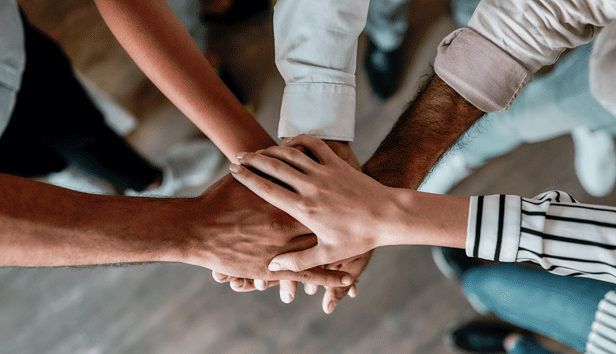
Trust in government is a cornerstone of American society, yet at times it seems to be at risk. Trust is especially important at the local level where members of communities may feel more directly impacted by government decisions. Strengthening trust helps create and protect thriving communities. This blog discusses several effective trust-building tools for local governments and includes examples of strategies.
Why Trust Matters
Trust is the steadfast belief in the reliability, competence, or strength of someone or something. When people trust their governments, they are more likely to follow a wide range of public policies, including those related to public health, public safety, regulations, and taxes. Trust also fosters active participation in politics, enhances social unity, and establishes the credibility of our institutions.
Building or rebuilding trust in government depends as much on the perceptions of individuals in government as the capabilities of government. In other words, governments must work both to increase perceptions of their trustworthiness as well as their actual capabilities to deliver services, products, and experiences worthy of trust.
Transparency and Communication
To build and rebuild trust, local governments prioritize transparency and open communication. Several common tools include:
- Proactive disclosure of information: Making data and information readily accessible to the public through online portals and other channels.
- Clear and concise communication: Using plain language and avoiding jargon in official documents and communications.
- Engaging with the community: Creating opportunities for public input through town halls, online surveys, and social media.
- Demonstrating responsiveness: Acting promptly on citizen concerns and providing timely updates on progress.
- Leveraging technology: Using digital tools to improve access to information and services.
A Culture of Collaboration
Building trust happens when a collaborative approach is valued. Effective local governments work closely with community organizations, businesses, and residents to embrace shared goals and address challenges. We recommend proactively seeking different views from diverse communities. Common tools for effective collaboration include:
- Involving residents in decision-making: Giving people a voice in shaping their local governments.
- Partnering with community groups: Building strong relationships with local organizations to address community needs.
- Supporting local businesses: Creating a business-friendly environment to stimulate economic growth.
Leadership by Example
Building trust is also about leadership. Elected officials and government employees demonstrate integrity, honesty, and a commitment to public service. This includes:
- Modeling ethical behavior: Setting a high standard of conduct for all government employees.
- Addressing mistakes: Acknowledging errors and taking corrective action.
- Building relationships: Fostering trust and collaboration with other government agencies and elected officials.
Rebuilding trust in local government is a long-term process that requires sustained effort and commitment. By prioritizing transparency, communication, accountability, efficiency, and collaboration, Washington State's local governments can regain the public's confidence and create stronger, more resilient communities.
Examples of Strategies that Build Trust
MRSC has compiled many good examples of strategies local governments are using to increase engagement in a way that helps build trust. This section highlights several.
The Everett Mayoral Directive on Community Engagement and Inclusion (2018) directs city staff under the leadership of the Mayor’s Office to coordinate with neighborhood and community groups and schools to increase community engagement; diversify the city workforce; enhance access to and information about city governments; improve customer service; and provide new youth engagement opportunities.
The Shoreline Climate Action Plan Update, Community Engagement Plan (2021) provides an overview of climate action strategies and detailed examples of actions that will improve equity, well-being, and a strong economy.
Citizen academies are community training and education programs about police resources. Here are links to several examples: Tacoma, Pasco, Lakewood, Auburn, Sea Tac, Longview, and Snohomish County.
Snohomish County Tomorrow is a cooperative and collaborative public inter-jurisdictional forum bringing together representatives from the county and 19 cities as well as the Tulalip Tribes and volunteer community participants to establish a framework for the development of local comprehensive plans and strategies.
Tacoma 2025 - citywide strategic vision and plan has five key focus areas, including civic engagement and equity and accessibility. Through the planning process, the city developed an Equity Index map to show how access to opportunity is distributed across the city. Tacoma’s Urban Forestry Team later used the map to improve tree canopy coverage and reduce urban heat island impacts in certain under-canopied neighborhoods
Targeted public participation is part of the Comprehensive Plan Update Public Participation Program – Whatcom County (2021) where the county seeks direct input from a broad base of public participants.
Conclusion
Washington State's local governments build trust in many ways through strategies and resources, including those in this blog and the resources links, below. Tools that build trust and public confidence help promote stronger, more resilient workplaces and communities.
Here are additional MRSC Resources:
- Blogs
- Trust: The Secret Ingredient in Your Budget Deliberations (2018)
- They Said What?! — Handling Misinformation (2021)
- Investing in Equity To Prepare for Environmental Challenges (2022)
- Managing Conflict at Work with Strategies that Actually Work (2023)
- Centering Equity in Climate Plans and Programs (2023)
- Building Trust During Polarizing Times (2024)
- Topic pages
MRSC is a private nonprofit organization serving local governments in Washington State. Eligible government agencies in Washington State may use our free, one-on-one Ask MRSC service to get answers to legal, policy, or financial questions.

About Linda Gallagher
Linda Gallagher joined MRSC in 2017. She previously served as a Senior Deputy Prosecuting Attorney for King County and as an Assistant Attorney General.
Linda’s municipal law experience includes risk management, torts, civil rights, transit, employment, workers compensation, eminent domain, vehicle licensing, law enforcement, corrections, and public health.
She graduated from the University of Washington School of Law.


