
How Sustainable Landscaping Boosts Local Climate Resilience
August 13, 2025
by
Lisa Pool
Category:
Climate and Sustainability
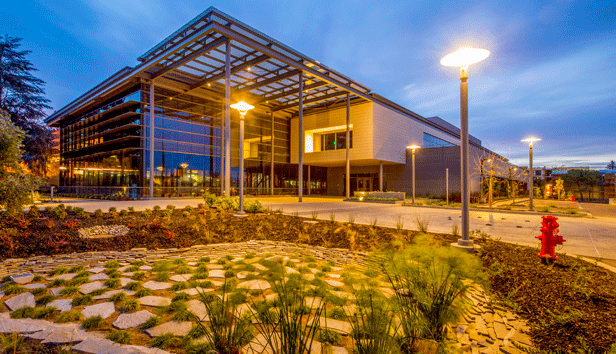
Washington local governments have long supported sustainable landscaping methods like green stormwater infrastructure (e.g., rain gardens and bioswales); drought-tolerant landscaping; and wildfire-resistant trees, plants, and shrubs for the myriad benefits they provide, from pollinator habitat to water quality and water conservation.
In this blog, I’ll cover some examples of sustainable landscaping programs — for both public and private projects.
Green Stormwater Infrastructure (or Low Impact Development)
Green stormwater infrastructure (GSI), also known as green infrastructure or low impact development (LID), includes methods to manage stormwater runoff that mimic natural processes. Instead of directing rainwater to storm drains and pipes, GSI uses solutions like plants, trees, and soil to capture, slow down, and clean runoff from storms.
The Washington State Department of Ecology’s (Ecology) Municipal Stormwater General Permits and Stormwater Manuals webpages provide stormwater permit implementation and management guidance, including manuals for both western and eastern Washington. Washington’s most populated cities and counties must comply with the National Pollutant Discharge Elimination System (NPDES) Phase I and Phase II Municipal Stormwater Permits, which require local governments to incorporate runoff treatment and flow control best management processes into new development. Also see Ecology’s Low Impact Development Guidance, which includes LID briefings for eastern and western Washington, as well as other LID resources.
The Washington State Department of Commerce’s (Commerce) Incentivizing Low-Impact Development: Beyond Permit Requirements helps jurisdictions create incentives to increase developer use of LID “above and beyond” stormwater permit requirements. It includes not only landscaping strategies, like vegetated roofs, but also permeable pavement and rainwater harvesting, as well as incentives local governments can offer (reduced fees, grants, rebates, and streamlined permit processes). Also see the Puget Sound Regional Council’s Green Stormwater Infrastructure Resource, which, while focused on the Puget Sound Region, includes resources that apply statewide.
Washington has several good examples of local GSI programs, including Seattle’s Green Stormwater Infrastructure, which features RainWise (rebates for rain gardens or cisterns), curbside rain gardens and bioretention systems, and tree planting. The city not only offers educational and incentives programs to community residents and businesses, it also builds and maintains GSI projects through its capital program, enforces its stormwater code, and develops partnerships to weave GSI into the built environment.
Bothell has comprehensive resources related to preventing stormwater pollution, with webpages dedicated to rain gardens, natural yard care, LID, and more. The city also offers a Managing Rainwater guide that focuses on LID for homeowners and promotes Snohomish County’s RainScaping Program, which offers customized nature-based stormwater solutions.
One specific GSI area of focus that several cities in Washington have implemented is green streets. These projects incorporate green infrastructure elements like bioretention and swales into streets to manage stormwater and provide other community benefits. Seattle's Green Streets are a land use code designation and overlay that incorporate not only GSI features but also pedestrians and open space. Edmonds also focuses on the environmental, transportation, health, and other community benefits of green streets through its Green Streets Guide that includes resources to inform future planning, design, and construction of the city’s green streets.
Water-Wise Plants
Water-wise plants thrive in dry conditions thereby conserving water and energy. Focused on drought-tolerant and native plants, water-wise gardens are adapted to the region’s climate and soil conditions, allowing them to thrive with minimal water.
Some communities incentivize homeowners to replace their traditional lawns with water-wise plant programs. For example, the SpokaneScape Lawn Replacement Program provides up to a $500 credit to Spokane area homeowners who remove their lawn and replace it with water-wise plants and mulch. Applicants are required to review the SpokaneScape Guidebook, design a landscape plan, compile a plant list, and submit an online application form. Following application submittal, program staff conduct a pre-inspection, after which the homeowner has two years to complete their project. They then receive a rebate through their utility bill after final inspection.
Denver is one example of a large city that’s considering requiring native grasses, shrubs, and trees in new development and some redevelopment projects to reduce water use and boost resiliency to climate impacts like extreme heat. In its background materials for the project, the city cites a goal of replacing non-functional turf, which uses a lot of water and does not serve a recreational or civic purpose, with landscaping that is successful in Denver’s dry climate.
Redmond is taking a different approach by focusing on rewilding city-owned and managed lands with naturalized and roadside meadows, pollinator gardens, and more. Current implementation projects include meadowscaping test sites throughout the community, like replacement of the traditional lawn at Municipal Campus Park with a water-smart tall fescue blend.
Another approach is to fold water-wise plant education into broader water conservation efforts. Two local examples include Spokane (this is in addition to their dedicated lawn replacement program) and Bellingham (see Gardening section).
Wildfire-Resistant Plants
Related to water-wise plants are wildfire-resistant plants, an ever-increasing field in the wildland-urban interface (WUI) as wildfire seasons in Washington and elsewhere across the country become more frequent and intense.
The Washington State Department of Natural Resources (DNR) provides resources to help homeowners protect their homes from wildfire. DNR also works with local fire districts, conservation districts, counties, and WSU Extension programs to help residents benefit from Firewise USA, which encourages homeowners and communities to prepare for wildfire. WSU’s Fire-Resistant Landscapes webpage includes two publications, Fire-Resistant Plants for Eastern Washington and Fire-Resistant Landscaping for Chelan/Douglas County, which highlight the strategy of planting the right plant in the right place for fire-resistant landscapes.
Poulsbo is an example of a local city that provides guidance to community members, including a detailed list of trees/plants to avoid; fire-resistant trees, shrubs, and perennials; and other helpful tips. King County's Fire Safety and Wildfire Risk Reduction resources include a list of Fire-Resistant Landscape Plants for the Puget Sound Basin and other tips for maintaining a wildfire safety zone 30 feet around a home, like removing dead plant material from the area. The Kittitas Fire Adapted Communities Coalition, which includes local government representatives, also notes:
A well-designed landscape around a home is key to reducing the risk of loss from a wildland fire… When placed in the appropriate areas of homes and businesses, and coupled with proper maintenance, this type of landscaping can help reduce damage from wildfires.
Conclusion and Additional Resources
This blog covers some of the ways local governments can incorporate sustainable landscaping strategies into their own projects and support them on private property throughout their communities. If you are not sure if your local government has sustainable landscaping policies and programs, these can often be found in comprehensive plans, as well as stormwater, climate, parks, and transportation plans. When developing and implementing these programs, coordination with multiple departments — public works, parks, planning, transportation, etc. — is critical to success.
To learn more about GSI and other sustainable landscaping strategies that can help communities become more resilient to climate impacts, register to attend our free webinar, Tools for Boosting Community Resilience to Climate Impacts, with state and local experts on October 29 from 1 — 2:30 PM.
See these resources for more information:
And these examples of green rating systems that include sustainable landscaping:
MRSC is a private nonprofit organization serving local governments in Washington State. Eligible government agencies in Washington State may use our free, one-on-one Ask MRSC service to get answers to legal, policy, or financial questions.

About Lisa Pool
Lisa Pool joined MRSC in June 2021. Most recently, she served as a senior planner for Bellingham. In this role, she primarily focused on long-range planning projects, including the city’s comprehensive plan and new housing regulations. Prior to moving to Bellingham, she worked on regional sustainability and transportation issues for a metropolitan planning organization and conducted development review for cities and counties in the Midwest.
Lisa holds a Bachelor of Arts in environmental policy and a Master of Urban Planning, both from the University of Kansas in Lawrence. She has been a member of the American Institute of Certified Planners since 2009.


