
Hidden in Plain Sight: Activating Urban Alleys
January 21, 2026
by
Lisa Pool
Category:
Streets and Sidewalks
,
Parks, Recreation, and Cultural Programs
,
Downtown Revitalization Series

A Pioneer Square alley. Photo courtesy of the Alliance for Pioneer Square.
Activating alleys has become an increasingly important strategy for community revitalization efforts across Washington. Often overlooked, alleyways offer opportunities for communities to add art, host events, and create beautiful public spaces.
Traditionally treated as purely utilitarian tucked-away areas, alleys are now being recognized by communities as places that can be transformed into vibrant, people-friendly focal points. These transformations can deliver multiple benefits, including a stronger sense of community, increased tourism, and enhanced safety.
In this blog, I’ll outline the benefits of alley activation projects, highlight common improvement strategies, and share lessons learned from local examples.
Art Installations and Events
Some cities use arts and culture to activate alleys through murals, art walks, performances, and other creative endeavors. For example, Bellingham hosts a popular mural program that includes several displays in its downtown alleys. The city’s Downtown Activation and Beautification Program, which draws on both lodging tax revenues and general funds, is one source of funding for not only mural projects, but other innovative projects.
A few examples of Bellingham’s alleyway mural projects include:
- Gallery Alley – A public alley exhibition featuring doors painted by local artists that are later auctioned to support Downtown Bellingham Partnership initiatives.
- Sunset Alley – Led by the nonprofit Paper Whale, this alley transformation incorporates art installations, cultural placemaking, and collaboration with adjacent businesses to enliven a downtown block.
A recent addition at the Whatcom Museum’s Lightcatcher building is a three-dimensional metal mural composed of hand-cut lanterns in the form of nocturnal animals illuminated from within. These lanterns activate a dark, frequently used pedestrian alley between the Bellingham Public Library and the museum.
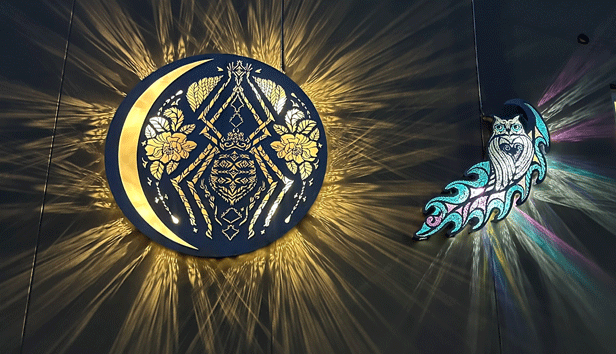
Lanterns at the Whatcom Museum. Photo courtesy of Amy Chaloupka.
Darby Galligan, Bellingham Senior Planner, had this to say about the benefits of the lantern installation and other alley activation efforts:
The Nocturnal Lanterns and other downtown activations create memorable experiences for visitors and enhance the city’s reputation as a tourism and arts destination. The projects provide a welcoming atmosphere and encourage people to visit, explore, and linger downtown, which increases foot traffic and boosts economic growth. We hope visitors and locals alike have a positive experience and are encouraged to return downtown.
Some alley-based arts and cultural efforts go beyond murals to include events and programming. Hosted by the Alliance for Pioneer Square in partnership with the Seattle Department of Transportation and the International Sustainability Institute (ISI), the Alley Network Project employs alley parties, art exhibits, and performances to revitalize alleys in Seattle’s Pioneer Square.
Guided by the city’s 2015 Design Manual, the project was recognized by the U.S. Department of Housing and Urban Development as a model community innovation for its approach to transforming underutilized urban areas into vibrant public spaces.
Collaboration is a key component of successful alley projects, whether focused on murals, events, or both. Lisa Dixon Howard, Executive Director (ED) of the Alliance for Pioneer Square, described the Alley Network Project this way:
One of the most important contributors to the project’s success has been the alignment between place, programming, and stewardship. Pioneer Square’s built environment—the historic buildings, human-scale alleys, and hidden corners—creates spaces where people naturally feel comfortable and curious. We matched that physical setting with events and pilot projects that were strong draws and felt authentic to the neighborhood. Just as important, stewardship of the program carried forward across partnerships—from the ISI to the Alliance for Pioneer Square—along with hundreds of artists, volunteers, and collaborators who continually brought life and care to the space.
Appearance and Infrastructure Updates
Additional ways to transform alleys include appearance and infrastructure improvements like re-paving and lighting.
In Seattle, the nonprofit Chinatown Historic Alley Partnership (CHAP) worked closely with local property and business owners and the Chinatown/ID Business Improvement District to implement the city’s Clear Alley Program in Canton Alley. This program is designed to keep business districts clean, safe, and accessible by streamlining or eliminating the storage of waste containers in the public right-of-way (ROW). Years ago, the city removed dumpsters from Pioneer Square’s alleys to improve their appearance and safety.
The city of Seattle also recently repaved Canton, Nord, and Pioneer Passage Alleys as part of its broader alley activation efforts. As a result, Canton Alley has been transformed into a pedestrian-friendly space with street pavers, lanterns, and lively events like Dragon Fest.
Beautification is the focus of Spokane’s efforts in an alley near Riverside Avenue. The Downtown Spokane Partnership (DSP), which administers the Downtown Spokane Business Improvement District (BID) and serves more than 850 business owners within an 83-block area, installs seasonal decorations such as beach volleyballs during the summer months, removes graffiti and trash, and pressure-washes buildings in preparation for murals. One goal is to make these alleys “Instagrammable” attractions, where people stop to snap photos for posting on social media platforms.
Olympia has taken a unique approach to alley activation by offering a Clean Alley Credit with its Pedestrian Interference (Sidewalk Café) Permit program. In downtown alleys that are not used for garbage and recycling pick up, adjacent businesses can “adopt” them. Allowing businesses to steward these alleys reduces public maintenance costs while creating cleaner, safer, and more dynamic spaces for downtown activity. Participating businesses still pay the state leasehold excise tax for permanent occupation of the ROW but receive a credit for the rent they would otherwise pay to use the space.
Smaller communities are also investing in alley infrastructure. The City of Sumner has begun work on Hopps alley as part of the Heritage Park development project, with funding from Sound Transit and Pierce County’s lodging tax and other sources. Planned upgrades include pavers, pedestrian- and site-scaled lighting, seating, and a new enclosure for garbage collection.
People-Focused Outdoor Public Spaces
Streets as places is a popular planning philosophy that seeks to enhance the quality of life for residents and the environment that can be applied to the entire transportation network. According to the Project for Public Spaces:
The overarching goal … is to transform the design and construction of public streets into places that improve the quality of human life and the environment rather than simply move vehicles from place to place.
Vancouver, British Columbia has successfully applied the streets as places concepts to alleys. Alley Oop, a pink and yellow laneway that opened in 2016, has become an Instagram favorite and venue for events like “Laneway Disco.”
The city’s Neighbourhood plazas program supports pop-up plazas that start as a pilot project and become a more permanent feature if community response is positive. Outcomes have included higher levels of safety, comfort, and community connection. According to the Vancouver Sun:
While the pandemic spurred a renewed interest in outdoor public gathering places, the drive for more public spaces began before 2020. A Downtown Vancouver Business Improvement Association study in 2015 identified public gathering spaces as a major missing link in the urban landscape. Vancouverites were clamouring for “more public space, including plazas, rooftop patios, and alleyway activations."
In Seattle, Canton and Nord alleys are designated as festival streets, which allows ISI to close the alleys to cars on select days for events. Nord Alley has hosted showings of the Tour de France, musical performances, and artist displays, some of which have been held in conjunction with Pioneer Square’s First Thursday Art Walks.
Pedestrian Amenities and Access
Touched on in earlier sections, amenities such as lighting and landscaping can help improve alley aesthetics and invite more pedestrians to travel through them or stay for events and shopping. These types of improvements are the focus of Spokane’s Innovation Alleyways program, which launched in 2019.
As part of the program, Spokane developed a toolkit informed by community feedback. The toolkit provides an accessible overview of permitting requirements for alleyway improvements, along with best practices for property owners and the broader community. The project webpage explains:
Historically, alleyways have provided limited functions and primarily serve as an access area that lacks visibility to the general public. Innovation Alleyways promotes transforming the use of alleyways to functional pedestrian spaces… The outcome is to encourage alleyway improvements in downtown… with lighting and greenery as well as people-oriented spaces for café seating, arts, music, and other programming that help make the alleys a destination.
Improved amenities, particularly lighting, can also encourage businesses to engage with alleys. For example, Back Alley Bike Repair began serving customers from a 700-square-foot space fronting Seattle’s Nord Alley after alleyway improvements were made.
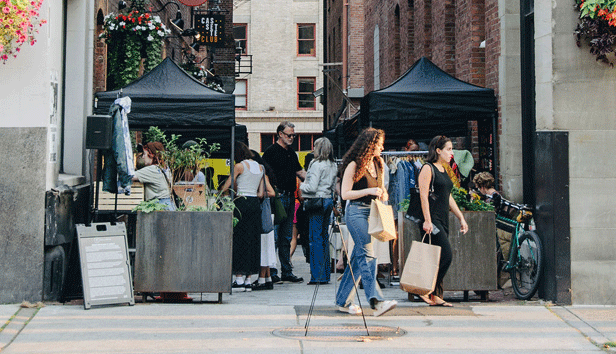
Pop-up shops in a Pioneer Square alley. Photo courtesy of the Alliance for Pioneer Square.
Liz Stenning, ED of the Downtown Everett Association and a key figure in Pioneer Square’s alley activation, explained that the focus was on shifting alleys from utilitarian spaces into pedestrian passageways—with features like mid-block crosswalks, enhanced lighting, and names inlaid in the sidewalks. Reflecting on these changes, she noted:
Part of the success with Pioneer Square’s alleys is the natural stewardship from residents, office workers, and property owners. Many of the alley entrances into buildings are frequently used by people coming in and out…. This brings more eyes and activity to the alley on a daily basis. Several property owners embraced this and incorporated doors into businesses over time.
Conclusion
Activating alleys is a powerful revitalization strategy, transforming underused spaces into community gathering areas. This strategy strengthens local economies, enhances safety, supports arts and culture, promotes sustainability, and aligns with statewide planning goals. By helping cities grow “from the inside,” alley activation makes existing neighborhoods more livable, resilient, and connected. To ensure success, cities should engage local property owners, business owners, artists, nonprofits, and the broader community early and often.
To close, I’ll share a few lessons learned from Lisa Dixon Howard, ED of the Alliance for Pioneer Square:
My biggest piece of advice is to remember that alley activation is, at its core, a community-building exercise. Invite people early, create space for new ideas, and actively support the stewards of the space—whether that’s artists, adjacent businesses, or residents. Successful alleys find the right balance between many elements: art and creativity, basic operations like trash management, the presence of active businesses, and the alley’s role as a functional pass-through. When you recognize and celebrate all of these pieces together, that approach sets the foundation for long-term success.
The author wishes to thank the following individuals for their contributions to this blog: Amy Chaloupka, Whatcom Museum; Darby Galligan, City of Bellingham; Lisa Dixon Howard, Alliance for Pioneer Square; and Liz Stenning, Downtown Everett Association.
MRSC is a private nonprofit organization serving local governments in Washington State. Eligible government agencies in Washington State may use our free, one-on-one Ask MRSC service to get answers to legal, policy, or financial questions.

About Lisa Pool
Lisa Pool joined MRSC in June 2021. Most recently, she served as a senior planner for Bellingham. In this role, she primarily focused on long-range planning projects, including the city’s comprehensive plan and new housing regulations. Prior to moving to Bellingham, she worked on regional sustainability and transportation issues for a metropolitan planning organization and conducted development review for cities and counties in the Midwest.
Lisa holds a Bachelor of Arts in environmental policy and a Master of Urban Planning, both from the University of Kansas in Lawrence. She has been a member of the American Institute of Certified Planners since 2009.


