
A Quick Guide to Utility Account Overcharges, Undercharges, and the Statute of Limitations
July 27, 2026
by
MRSC Insight
Category:
Utilities - Billing and Collection
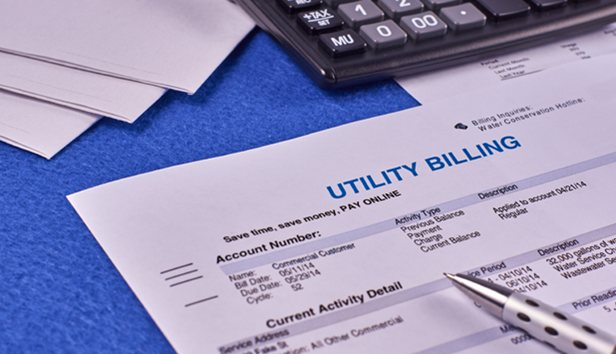
The world is an imperfect place, so sometimes mistakes happen. In the context of utility billing, if the mistake is discovered quickly, an appropriate adjustment can be made on the next bill, and things return to normal. Sometimes, though, a mistake goes undetected for years, making the situation difficult to rectify for both the utility and its customer.
This blog will explore the intersection between utility billing and the statutes of limitation, paying particular attention to how application of the statutes differs depending on whether there is an overcharge or an undercharge.
Overcharges and Starting the Three-Year Clock
MRSC is of the view that, in most cases, the statute of limitations for a utility overcharge is three years under RCW 4.16.080. The two subsections of the statute that apply are:
- subsection (3) – action on a contract not in writing, or
- subsection (4) – action for relief from fraud, once discovered.
But three years from when? Typically, an action to recover utility overpayments will be brought by the customer, so the applicable statute of limitations may depend on how the claim is pled; is it based on an unwritten contract or on discovered fraud?
In addition, the time at which the statute of limitations starts to run will depend on whether an overcharge could have been discovered by the customer in the exercise of reasonable diligence—i.e., the overcharge was apparent by regularly reviewing the bills or account. So, the three-year statute of limitations to bring a claim on an apparent overcharge on the bill would be three years from that particular bill.
What happens if the overcharge is not apparent from the bill? The primary Washington case on utility overcharges and the statute of limitations is Western Lumber v. City of Aberdeen (1973).
In Western the customer discontinued operation of a sawmill but continued to receive water bills with high consumption rates. The parties inspected the lines and discovered an extra water meter that had resulted in charges for double the amount of water actually used by the mill over a 12-year period.
The utility refunded the most recent three years of overcharges based on RCW 4.16.080(3)—as an unwritten contract to provide water at a certain rate—taking the position that the statute of limitations precluded a refund going back more than three years.
The customer promptly sued to recover the overcharge for the remaining nine years, asserting that RCW 4.16.080(4) applied, and that the three-year statute of limitations did not begin to run until the customer discovered the second water meter and overcharge. Under this “discovery of fraud rule,” the customer would be entitled to a refund for the entire 12-year period since the customer filed the lawsuit within three years of discovering the overcharge or fraudulent “misrepresentation.”
The court agreed with the customer. Although RCW 4.16.080(4) refers to “fraud,” the courts have interpreted the term to include negligent and innocent misrepresentations on the part of the utility. The fact that the utility did not intend to overcharge the customer was not relevant to the court’s statute of limitations analysis, and the customer’s refund period was not limited to three years.
Under the “discovery rule,” knowledge of the fraud or misrepresentation is inferred if a customer, through exercise of due diligence, could have discovered it. Thus, if an overcharge arises through a utility’s misrepresentation, the utility should assess whether and how the discovery rule impacts the time period for which a refund should be provided.
When the overcharge is not connected to misrepresentation
In some cases, an overcharge may be discoverable by the customer from the beginning. If this arises, a three-year refund period from the applicable bill may be appropriate.
Consider this scenario: a utility properly imposes stormwater utility charges on a customer. The customer then removes the structure on the property that provided the basis for imposing a stormwater charge but does not inform the utility, which continues to bill for stormwater. Six years later, the customer seeks a refund.
During this six-year period the customer has received periodic bills from the utility showing a line item for a stormwater charge. A utility in this situation could argue the refund period should still be three years since the customer was made aware of the stormwater charges each time a bill was received.
Undercharges and Accounts Receivable
When a government utility discovers it has undercharged a customer, it generally must collect the amount of the undercharge for the following reasons:
- To avoid violating the gift of public funds doctrine.
- To avoid violating the public policy against rate discrimination and preferences as stated in Housing Authority of King Co. v. NE Lake Washington Sewer & Water District (HAKC: 1990).
In HAKC a government housing authority constructed a 16-unit low-income housing project on property that had previously been used as a single-family residence. The utility billed the property at single-family rates for over four years before discovering the error.
The housing authority sought a court declaration that it was not responsible for paying the balance due, asserting equitable defenses such as laches and estoppel—concepts of fundamental fairness. The court concluded that the public policy against rate discrimination requires a government utility to collect undercharges even when the customer happens to be another government entity that provides affordable housing.
In light of that public policy, a utility customer (whether it is a private or government entity) may not assert equitable defenses in response to an action to recover utility undercharges. (Although HAKC involved a water-sewer district operating under RCW Title 57, the public policy that charges shall be uniform for the same classes of customers or services applies to all municipal utilities.)
Undercharges and the statute of limitations
Having established that government utilities are obligated to collect on undercharges, how far back can they go? What statute of limitation could be used to block collecting on older undercharges?
Again, the answer is not simple. RCW 4.16.040(2) provides for a six-year statute of limitations for an account receivable, which is defined as:
any obligation for payment incurred in the ordinary course of the claimant's business or profession, whether arising from one or more transactions and whether or not earned by performance.
Utility accounts likely fall within this definition of an account receivable, and the six-year statute of limitations would therefore apply to amounts that are due to the utility but not paid by its customers.
Utilities generally also have faster, more efficient ways of collecting delinquencies, either by disconnecting service or filing real property liens (note that the availability of these remedies vary by type of utility and type of municipal entity). When used correctly those options often resolve the delinquency without the need to file an action to recover an account receivable.
Back-billing and the statute of limitations
If a utility finds it has underbilled a customer over an extended period of time, can it simply back-bill the customer and apply the six-year statute of limitations to that new bill?
The answer is “no” based on the 2003 unreported Washington Court of Appeals decision in City of Snohomish v. Seattle-Snohomish Mill Co., Inc. In this case the utility suspected underbilling between 1990 and 1998 but did not issue a bill for the period in question until 2001 and did not file its lawsuit to collect until 2002.
The court rejected the notion that a utility seeking to back-bill older undercharges can unilaterally extend the statute of limitations until it prepares a bill for the uncharged amount. Even if the utility knew much earlier that it had suffered a compensable injury, under such a rule there would be no limit to how long parties could extend the limitations period for an unbilled debt.
Instead, the Snohomish court ruled that the discovery rule applies to the utility and the statute of limitations begins to run when the utility, in the exercise of reasonable diligence, should have known of the underbilling.
The Snohomish court considered applying the six-year statute of limitations, but it was unclear at that time whether it applied to underbilled accounts, so the court ended up applying the three-year statute of limitations. However, this was before a 2007 amendment to RCW 4.16.040(2) that clarified and expanded the definition of “account receivable.” If a similar situation were to arise in the future, the court will likely apply the six-year statute of limitations.
Regardless of the applicable time period, under the reasoning of Snohomish, the statute of limitations runs from the time the utility should have known of the underbilling, regardless of how quickly the utility back-bills the amount of the undercharge.
Conclusion
Long-term utility billing errors can raise difficult issues for utilities that should be reviewed on a case-by-case basis with legal counsel.
The Snohomish case is unpublished, which means it does not have binding precedential value in Washington courts; it nevertheless illustrates the need for caution and careful analysis when attempting to resolve long-term utility billing problems.
MRSC is a private nonprofit organization serving local governments in Washington State. Eligible government agencies in Washington State may use our free, one-on-one Ask MRSC service to get answers to legal, policy, or financial questions.


