
Planning for Drought: Lessons from Washington Communities
June 10, 2026
by
Alicia Bones
Category:
Climate and Sustainability
,
Environmental Laws and Regulations
,
Emergency Management
,
Natural Resources
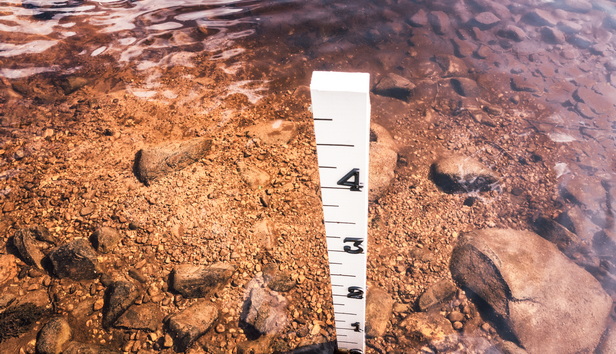
On April 8, 2026, the Washington State Department of Ecology (Ecology) declared a statewide drought emergency. It is the fourth year in a row that part or all of Washington has been in drought, and the fourth statewide emergency since 2015. As Ecology director Casey Sixkiller said to the Washington State Standard, "Drought is becoming the pattern, our new normal."
For local governments, the question is no longer whether droughts will come but how to prepare for this likely eventuality. In this blog, I will share how eight Washington jurisdictions, from small towns to large utilities, are dealing with drought. Their experiences show what is working, where plans fall short, and what other agencies should consider in developing their own plans.
Understanding Drought and Drought Declarations
State law sets two tests for a drought declaration. Water supply must fall below 75% of normal, and the shortage must be likely to cause hardship for water users or the environment. This year, every watershed in the state met both tests.
The problem is a lack of snow, not rain. Though total precipitation was close to normal, the state’s warm winter meant much of it fell as rain or melted early instead of building snowpack. Washington depends on snowpack as natural storage that melts slowly through spring and summer. This year it ended at about half of normal. In the 1990s, these "snow droughts" used to happen about twice a decade. They now happen about four times a decade, and the state expects roughly seven in every ten years by the 2050s.
A drought declaration also gives the state more tools to cope with these issues. Ecology can speed up emergency water-right permits, approve temporary transfers between users, and send drought grants to cities, irrigation districts, and public utility districts (PUDs). Grant applications are open through August of this year.
How Water Gets Cut
Surface water rights allow property owners to divert water from its natural source (river, stream, lake, etc.) and use it for a specific purpose. In Washington, these rights are managed by state law implemented by Ecology.
In this state, surface water rights have priority dates, and the older the right, the stronger it is. In a water shortage, Ecology cuts the newest (junior) rights first to protect the oldest (senior) ones.
As the Seattle Times reports, the cuts went further in 2025. In the Yakima Basin, the shortage was so severe that Ecology curtailed every surface-water right across the 6,100-square-mile basin, both senior and junior. Only the most senior right, held by the Yakama Nation and dating to the Treaty of 1855, stayed in place.
One detail matters for the examples discussed below: the state cut surface water only, not groundwater from wells. How hard a community is hit by drought often comes down to where it gets its water.
Drought Planning in Practice: Municipalities with Single Source Water Supplies
Some municipalities only have a single water source, typically either a surface-water source like a river, or an underground well or aquifer. While only surface water sources are currently affected by drought, wells and aquifers may not be enough protection against drought in the future.
Roslyn
Roslyn, a town of about 1,000 people, draws its water from a single surface-water source. Around 2009, the city spent about $600,000, helped by a $400,000 state grant, to buy two senior water rights to protect against shortages.
That hedge failed in 2025, when Ecology curtailed senior and junior rights, and the rights it had bought no longer counted. The town has no other source and now expects to drill wells, at significant cost.
Yakima
When its Naches River supply was curtailed in 2025, the city of Yakima switched to its backup wells and kept water flowing. But the wells deliver only about 13 million gallons a day, against roughly 20 million from the river, and summer peak demand sits between the two.
As the city’s water division manager Mike Shane told the Seattle Times, "Groundwater supply alone does not meet peak demands."
A backup well sized for an average day’s use can still come up short on hot days. The city wants aquifer storage wells and has Ecology's permission, but it doesn’t have the money to begin these costly projects.
Ellensburg
Ellensburg draws nearly all its water from wells, so the 2025 surface-water cuts impacted the city less than other places. However, using only wells as a water source is not permanent protection. Groundwater is finite, and aquifers are dropping across the West.
Drought Planning in Practice: Municipalities/ Districts with Voluntary and Mandatory Use Limits
Some municipalities ask community members to limit their water usage during periods of drought. As drought conditions worsen, some local governments may require water limiting strategies. Residents who don’t follow these regulations may incur fines.
Kennewick Irrigation District
The Kennewick Irrigation District opens each season with a voluntary watering schedule and tightens to mandatory limits only if conditions demand it. It is also lining and widening its main canal to store the equivalent of a 12,000-acre-foot reservoir.
Clallam County PUD No. 1
Clallam County PUD No. 1 works from a written drought plan with stages leveling up automatically with state conditions. In April it issued a Stage 1 alert notifying users they should be aware that voluntary or mandatory water conservation practices may be coming.
This did happen when the PUD ramped up to Stage 2 voluntary conservation in May. It asked users in the Carlsborg, Evergreen, Port Angeles Composite and Panoramic Heights water systems to implement voluntary water conservation strategies, including:
- Reducing outdoor water use
- Fixing leaky sinks and toilets
- Installing low-flow showerheads and faucets
All of these water systems rely on water wells that have (so far) been fairly drought resistant. However, the PUD’s Island View system, which relies on surface water, has needed water trucked in during past dry years.
Lacey
The city of Lacey also relies solely on local groundwater wells fed by three aquifers managed by the city’s public works department. However, the city’s water usage doubles in summer from the cooler months. So, since 2006, Lacey has run a mandatory odd-even watering schedule from June through September, adopted to avoid building costly new infrastructure for summer demand.
If residents don’t follow this watering schedule, they incur increasing fines, ending in a water service shut off after the fourth violation.
The rule has held peak summer use to about 15 million gallons a day, down from 17 million before it took effect, even as the city has grown.
Everett and Snohomish County PUD
Everett and the Snohomish County PUD supply about 670,000 people from the 50-billion-gallon Spada Reservoir, which serves drinking water, fish habitat, and power at once. Early planning and the reservoir's size are keeping this year close to normal for customers. The utility has also spent $13 million on a system that draws cooler water from deep in the reservoir to protect salmon and steelhead living downstream from the reservoir.
Seattle Debates New Water Use Issue
Not every drought question is about supply; some are about absorbing new demand.
When companies approached Seattle about building five large data centers, with a combined draw near 369 megawatts, councilmembers proposed a one-year pause and a study of how the facilities would affect water use and rates. Residents raised the drought directly in public comment.
On Tuesday of this week, the Seattle City Council passed a one-year moratorium on the development of new large data centers, while also directing staff to study how data centers impact the city's electrical grid capacity, water usage, utility rates, and other factors.
Common Threads Among Local Governments
Communities with single water sources are at risk, especially now that senior rights (like those purchased by Roslyn) no longer guarantee use. Developing groundwater storage wells can diversify water sources and can help an agency provide water during periods of drought.
However, these wells shouldn’t be the only water source, either, as groundwater across the West is becoming more limited.
As drought is becoming more common in Washington, municipalities must implement conservation strategies to mitigate the impact on local communities. Voluntary water conservation strategies, like the ones used by Clallam County PUD No. 1, help residents stay informed about drought and participate accordingly. Mandatory strategies, like Lacey’s summertime watering calendar, further prevent water overuse.
MRSC is a private nonprofit organization serving local governments in Washington State. Eligible government agencies in Washington State may use our free, one-on-one Ask MRSC service to get answers to legal, policy, or financial questions.


