
Expanded Housing Options for Counties Thanks to Two 2026 Bills
May 6, 2026
by
Leonard Bauer
Category:
Comprehensive Planning-Growth Management
,
Housing
,
Rural Uses
,
New Legislation and Regulations
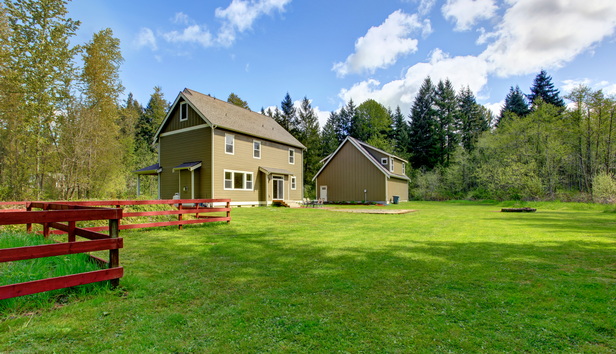
Counties in Washington State have land use and permitting authority over housing development in unincorporated areas but have faced challenges due to limitations of rural sewer and water services and the need to maintain rural character as required by the Growth Management Act (GMA).
However, counties’ role in allowing housing in unincorporated areas has been more clearly defined by two bills adopted by the legislature during Washington’s 2026 Regular Session, HB 1345 and HB 2269:
- HB 1345 authorizes counties planning under the GMA to adopt ordinances that allow accessory dwelling units (ADUs) outside of urban growth areas (UGAs) under certain conditions.
- HB 2269 expands the conditions under which some counties may allow middle housing (defined at RCW 36.70A.030(28) in limited areas of more intensive rural development (LAMIRDs).
This blog summarizes these bills and the implications for housing development in counties that allow short-term rentals. Both bills go into effect June 11, 2026.
HB 1345 – Detached ADUs Outside of UGAs
HB 1345 allows counties to adopt ordinances that permit one detached accessory dwelling unit (DADU) per lot outside a UGA (see RCW 36.70A.696 for definitions of ADUs and DADUs).
HB 1345 explicitly does not affect or modify the validity of any county ordinance adopted previously, nor does it change county’s responsibility to allow ADUs inside UGAs per RCW 36.70A.680 - .699.
While the bill is intended to provide more housing options outside UGAs while protecting rural character and natural resources, it includes a fairly lengthy list of conditions (see Section 1) under which DADUs can be permitted.
Any county that allows DADUs outside of UGAs must meet code enforcement and reporting requirements.
- The code enforcement measures must include a voluntary compliance process for an owner of an unpermitted DADU to bring it into compliance with applicable regulations. (Owners of unpermitted DADUs who do not voluntarily comply must be subject to a civil infraction of at least $1,000 and be required to remove the DADU.)
- Counties must report annually to the Washington State Department of Commerce the number of DADU permits issued. They must use this data to update their comprehensive plans, incorporating limits to the percent of planned growth that can be allocated to DADUs.
HB 2269 – Middle Housing in LAMIRDs
As defined in RCW 36.70A.030(28), middle housing means residential buildings that are compatible in scale, form, and character with single-family houses, including:
- duplexes and other multiplexes with up to six units,
- townhouses,
- stacked flats,
- courtyard apartments, and
- cottage housing.

Previously, RCW 36.70A.536 (adopted in 2025) required that middle housing only be allowed in areas served by a public sanitary sewer system. HB 2269 amends this statute to allow for the development of middle housing within certain types of limited areas of more intensive rural development (LAMIRD) in a rural county on sites served by large on-site sewage systems.
The new legislation specifically applies to “Type 1” LAMIRDs as described in RCW 36.70A.070(5)(d)(i) and as defined in a county’s comprehensive plan. (Note, however, in non-rural county LAMIRDs, middle housing must still be served by a publicly owned sanitary sewer system.)
Large on-site sewage systems (LOSS) are regulated by the Washington State Department of Health (DOH), and rural counties will need to coordinate permitting of new middle housing in “Type 1” LAMIRDs with DOH’s LOSS permit process to ensure all LOSS regulations are met.
Implications for Short-Term Rentals
Expanding opportunities for middle housing and ADUs will increase the availability of these less-expensive housing types for rural residents. In fact, when the state legislature required local governments to allow ADUs in 2023 it declared:
The legislature intends to promote and encourage the creation of accessory dwelling units as a means to address the need for additional affordable housing options. (RCW 36.70A.680 – Findings)
However, owners of middle housing and ADUs frequently seek to rent them as short-term rentals (STRs), which can limit the supply of housing available for long-term rental.
As counties consider implementation of these two bills, they should also review their STR regulations to avoid unintended impacts on housing availability. Chelan County, for example, recently updated their regulations to limit STRs to a maximum share of the total housing stock in residential zoning districts by subarea.
Conclusion
HB 1345 and HB 2269 expand opportunities for counties to allow a greater variety of housing that is affordable to more rural residents. Some counties may choose to allow detached ADUs outside of UGAs and middle housing in LAMIRDs served by large on-site sewage systems.
Counties should carefully read these two bills and consider the conditions under which they may allow the development of these housing types. They also should review their STR regulations to ensure that any new rental housing developed thanks to these legislative changes is primarily available for long-term residents.
MRSC is a private nonprofit organization serving local governments in Washington State. Eligible government agencies in Washington State may use our free, one-on-one Ask MRSC service to get answers to legal, policy, or financial questions.

About Leonard Bauer
Leonard Bauer has over 35 years of public service experience in planning and community development.
He worked for MRSC from 2024 through fall of 2026 as a planning consultant. Prior to that he was the community planning and development director for Olympia for 10 years. He also served the Cities of Sumner and Tumwater, a regional council of governments in Eugene, OR, and the Washington State Growth Management Services Office at the Department of Commerce.
Leonard is writing as a guest author. The views expressed in guest columns represent the opinions of the author and do not necessarily reflect those of MRSC.


