
Elections Safeguards: Protected Zones at Ballot Drop Boxes and Voting Centers
October 6, 2026
by
Linda Gallagher
Category:
Elections and Voting
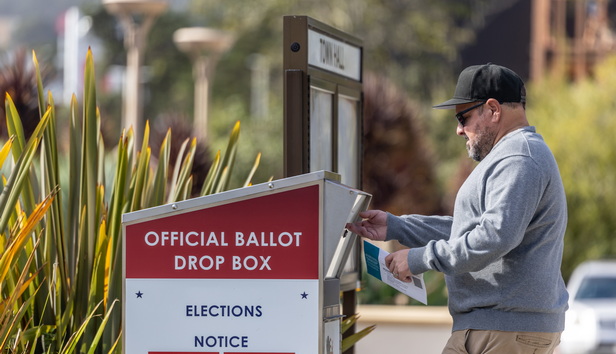
As the 2026 General Election gets under way, early voting begins October 16 when ballots are mailed to registered voters, and the 18-day voting period (through Election Day) begins.
Many voters are expected to place their completed ballots in official ballot collection sites (drop boxes) instead of the U.S. mail. According to the Office of Washington Secretary of State (SOS), there are currently 574 official ballot drop boxes and 57 voting centers.
State law provides protected zones of 25 feet around ballot drop boxes and 100 feet around voting centers. As people enter and leave these buffer zones, they are protected by a balance of two fundamental principles: the right to exercise voting rights and the right to political expression.
Understanding state law about prohibited activities in the zones at these ballot collection sites (drop boxes and voting centers) is an important part of secure elections. My blog summarizes this law and addresses several questions about how local governments support these legal requirements. I’ve also included links to additional resources.
Protected Zones
State law in RCW 29A.84.510 provides protected buffer zones of 25 feet around each ballot drop box and 100 feet around official voting centers and student engagement hubs. Zone boundaries are “measured radially” (in a circle) from the ballot drop box openings or from the entrances to voting centers or engagement hubs.
RCW 29A.84.510 lists four categories of activities that are prohibited within these zones, as summarized in the implementing regulations in WAC 434-250-100:
- Electioneering,
- Circulating campaign materials,
- Soliciting petition signatures, or
- Interfering with or impeding the voting process.
This law also limits “electronic amplification”—for example, with microphones and speakers—outside of these zones if the sound is capable of being heard and understood within the zones. This restriction prevents people from circumventing the protection of the buffer zones by using amplification technology. (Note, however, there is not a prohibition on unamplified speech just outside of a buffer zone.)
County auditors are required to post signs that provide notice of the prohibited activities within the protected zones and have authority to seek law enforcement assistance whenever necessary to maintain order around ballot drop boxes or voting centers. Violations of this law constitute crimes and would be gross misdemeanors.
The 25- and 100-foot buffer zones reasonably restrict certain political activities because the zones are viewpoint neutral and are considered constitutional “time, place, and manner” restrictions—limits being on “place” in this context.
Outside these limited boundaries, people retain their First Amendment rights, including their rights to engage in political speech, advocacy, and peaceful assembly.
May Counties, Towns, or Cities Enlarge the Protected Zones?
MRSC has been asked about how local governments may improve safety and security at ballot collection sites (including official drop boxes) potentially by making the protected zones around ballot drop boxes and voting centers larger than the proscribed 25 or 100 feet. This is likely not an option because of the preemption doctrine.
State law comprehensively addresses elections-related crimes, including for ballot collection sites, in RCW 29A.84.510. A city, town, or county ordinance that increased these distances would forbid what state law allows—thus bringing the local law into conflict with the state.
Under the preemption doctrine, cities, towns, and counties cannot establish inconsistent or enhanced criminal penalties for the same conduct already addressed in state law.
Use of Surveillance Cameras
In general, use of surveillance cameras is an available option for elections security.
Video cameras are a cost-effective security measure with both deterrent and evidentiary value. Monitoring with cameras is a measure that could protect from tampering activities with ballot drop boxes and could also help deter prohibited behaviors within the zones that protect people while they drop off ballots.
In fact, some drop boxes and voting centers may already be covered by public security cameras, depending on their location. Systems could include 24/7 recording, motion activation, night or low light vision, and multiple camera angles.
State law is silent about camera surveillance of ballot drop boxes, so there would not be the same preemption issue with conflicting laws if a city, town, or county adopts a local policy for security cameras for election activities.
A note of caution
I do suggest caution when using security cameras. A conservative approach would be to record video footage but not audio. Note, also, camera recordings would be subject to the Public Records Act (PRA).
Depending on the location, audio recordings may be prohibited because state law makes it illegal to record a private conversation without the prior consent of all participants in the conversation (see RCW 9.73.030).
Agencies should work closely with their legal counsel when considering a new camera policy and review any policies for existing surveillance systems. This review should include policies for records retention, public records, and potential future use as evidence of violations or in post-election audits.
Staffing at Ballot Drop Box Locations
State law authorizes counties to have both staffed and unstaffed ballot drop box locations. During times of higher volume of ballot submissions such as just before and on Election Day, certain ballot boxes may be staffed when they otherwise are not.
There are specific state laws about staffing, especially within the buffer zones. In addition, elections employees and volunteers are prohibited from the same activities within the buffer zones: They may not engage in electioneering, distribute campaign materials, collect petition signatures, or interfere with voting rights or election administration.
WAC 434-250-100(1) authorizes staffed ballot deposit sites:
A staffed ballot deposit site must be staffed by at least two people. Deposit site staff may be employees of the county auditor's office or persons appointed by the auditor.
The regulation also requires bipartisan balance for appointed staff, noting: "appointed personnel shall be representatives of different major political parties whenever possible." his ensures partisan fairness and helps build public confidence in the integrity of the process.
Public Education Campaigns
Local governments are allowed to—and in some situations are required to—provide public education/outreach about elections, including voting rights and security measures surrounding ballot collections.
Public education/outreach should cover elections-related security measures in place, how to report suspicious activity or buffer zone violations, and the protections surrounding drop boxes. Clear signage marking the 25- and 100-foot zone boundaries and notices are required under RCW 29A.84.510(2). In addition, voting materials in different languages are required.
The SOS provides public education resources about these laws and election.
Conclusion and Resources
The 25-foot protective buffer zone around ballot drop boxes and the 100-foot buffer for voting center entrances under Washington law both protect political expression activities outside the zones and provide voters with protected and unimpeded access to submit their ballots without direct pressure or interference.
Local governments, especially county elections officials, have an important role in ensuring safe and secure elections, including with respect to ballot collection sites.
Here are some additional resources:
- Brennan Center for Justice Guide to Laws Against Intimidation of Voters and Election Workers – Covers federal and state laws protecting access to the ballot.
- Georgetown Law, Institute for Constitutional Advocacy and Protection Guidance for Election Officials to Prevent and Address Voter Intimidation
- MRSC
- U.S. Department of Justice Ballot Drop Box Accessibility (2010) – Covers requirements for making boxes accessible are required under the Americans with Disabilities Act (ADA).
- Washington SOS Washington Election Law Book (2026) – Published annually with election laws, administrative codes, and state constitutional requirements for election officials.
MRSC is a private nonprofit organization serving local governments in Washington State. Eligible government agencies in Washington State may use our free, one-on-one Ask MRSC service to get answers to legal, policy, or financial questions.

About Linda Gallagher
Linda Gallagher joined MRSC in 2017. She previously served as a Senior Deputy Prosecuting Attorney for King County and as an Assistant Attorney General.
Linda’s municipal law experience includes risk management, torts, civil rights, transit, employment, workers compensation, eminent domain, vehicle licensing, law enforcement, corrections, and public health.
She graduated from the University of Washington School of Law.


