
ADA Website Guidance: Lessons From Puyallup's Accessibility Planning
September 2, 2026
by
Alicia Bones
Category:
Americans with Disabilities Act
,
Information Technology
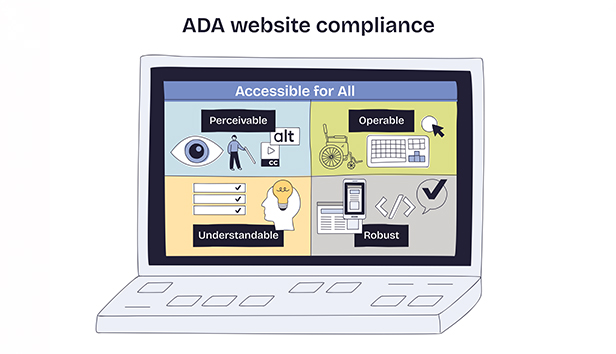
In April 2024, the U.S. Department of Justice (DOJ) adopted a final rule establishing accessibility requirements for state and local government websites and mobile apps. The rule sets Web Content Accessibility Guidelines (WCAG) Version 2.1, Level AA as the standard for government websites and mobile apps, with the following compliance deadlines:
- 2027 for jurisdictions over 50,000 people
- 2028 for smaller jurisdictions and special purpose districts
For Dan Vessels Jr., city clerk and ADA coordinator for the City of Puyallup, preparing for those requirements became about more than the city's website. Through presentations to clerks and records professionals around Washington, Vessels found that many agencies had questions about how to comply regarding PDFs, archived documents, meeting recordings, vendor responsibilities, ongoing maintenance, costs, and other concerns.
I talked to Vessels about the lessons learned through developing Puyallup’s ADA compliance and ideas he has for local governments aiming to meet these standards.
What Compliance Involves
When responsibility for ADA coordination shifted to Vessels, he began researching what the new requirements would mean for Puyallup. He discovered accessibility planning extends well beyond a government homepage.
The rule applies to the services, programs, and activities local governments provide online through websites and mobile apps, including documents, forms, images, videos, and other digital content, according to DOJ guidance.
That broader scope has created uncertainty for many agencies. Through his presentations, Vessels found that local governments are still trying to determine whether they need an ADA coordinator, who should lead accessibility efforts, and how responsibilities should be divided among departments.
As he explained, “A lot of folks are not aware of the deadlines at all.”
Start With Your Website
For local governments wondering where to begin, Vessels recommends starting with a review of the agency's website.
“If you don't know if your website it compliant, you need to look at it now,” he said.
Puyallup uses CivicPlus and AudioEye as part of its accessibility efforts. Vessels also highlighted vendors such as OpenGov that can perform accessibility reviews, identify barriers, and help agencies prioritize remediation work.
Many of the issues identified through those reviews are the same barriers highlighted in DOJ guidance, including missing alt text (which describes visual content for use by screen readers), poor color contrast, inaccessible online forms, and websites that cannot be navigated using a keyboard.
Missing alt text comes up repeatedly, particularly for agency logos, photographs, maps, and other graphics.
PDFs, Maps, and Archived Documents Raise Questions
PDF accessibility came up in nearly every training session Vessels conducted.
Many local governments have years of agendas, reports, maps, studies, and other documents posted online, typically in PDF format, and agencies are struggling to determine what must be updated before the compliance deadlines. Many of these were created before accessibility became a routine consideration.
Older PDFs and other posted documents may qualify as archived content only if they are kept for reference and not changed after the compliance date. If an agency revises, updates, or reposts that material, Vessels said it should be treated as new or updated content: “Once you do change, you have to keep it updated.”
So, updated reports, revised maps, new agendas, and modified documents may all require additional accessibility reviews.
Vessels also discussed concerns involving scanned PDFs, heading structure, and screen-reader compatibility. If a scanned PDF has not gone through optical character recognition, a process that converts scanned images of text into readable text may function like an image, preventing screen readers from reading it.
Meeting Videos May Be the Next Major Challenge
Videos generated some of the most discussion during Vessels' presentations.
Many agencies are already familiar with captions and transcripts, but audio descriptions have raised additional questions about implementation, staffing, and cost.
Accessibility requirements for video content are addressed in DOJ guidance, and many agencies are still determining how those requirements will affect their meeting recordings and other video content.
Vessels spent considerable time discussing audio descriptions, explaining that “the audio descriptor file has to describe what's happening in the scene.”
He pointed to examples such as speaker transitions and movement to and from the podium during public meetings. For instance, an audio description may need to note when a speaker leaves the dais, when another person approaches the podium, or when a visual presentation is being shown but not otherwise explained.
Vessels also discussed emerging technology, including Granicus products and artificial intelligence tools designed to assist with accessibility work. While those tools may reduce some of the workload, agencies should expect to spend time reviewing the output.
As he noted, “you have to vet it” to ensure names, titles, and descriptions are correct.
Cost remains one of the biggest concerns. Vessels estimated that some audio description services cost approximately $2 per minute of video. For jurisdictions that routinely post multiple hours of public meetings each month, those expenses can add up quickly.
This is an area where agencies may not yet have easy solutions, especially when audio descriptions are expensive or difficult to add at scale.
Planning Ahead Can Reduce Costs and Surprises
One of the most common questions Vessels hears from local governments is how accessibility improvements will be funded. Many agencies are trying to understand the costs associated with website remediation, document accessibility, software tools, vendor support, staff time, video accessibility services, and ongoing maintenance while working within already constrained budgets.
Accessibility obligations remain with the government entity even when a third party manages website content. Content posted by companies hired to design, manage, or update government websites generally must still comply with accessibility requirements.
For more information on these requirements, see the MRSC blog April Deadline Approaching to Implement Mandatory ADA Standards for Local Government Websites and Apps (though note the deadline for compliance has been extended).
For that reason, Vessels encourages agencies to begin discussions with vendors now rather than waiting until the deadlines approach. Early conversations can help agencies understand what services are available, identify accessibility barriers, estimate costs, and begin planning for future work.
As Vessels puts it, “You can't put it off.”
Conclusion
Puyallup's experience suggests that accessibility planning involves much more than updating a website. It includes reviewing documents, evaluating videos, understanding vendor relationships, assigning responsibilities, and planning for ongoing maintenance. As Vessels noted, “ADA compliance helps everyone in our community.”
Agencies that start early will have more time to identify accessibility barriers, understand potential costs, and prepare for compliance before the applicable deadlines arrive.
MRSC is a private nonprofit organization serving local governments in Washington State. Eligible government agencies in Washington State may use our free, one-on-one Ask MRSC service to get answers to legal, policy, or financial questions.


