
When Homes Are Abandoned but Problems Remain: Abating Nuisances at Zombie Homes
August 26, 2026
by
Harry Boesche
Category:
Nuisance Abatement and Enforcement
,
Property Nuisances
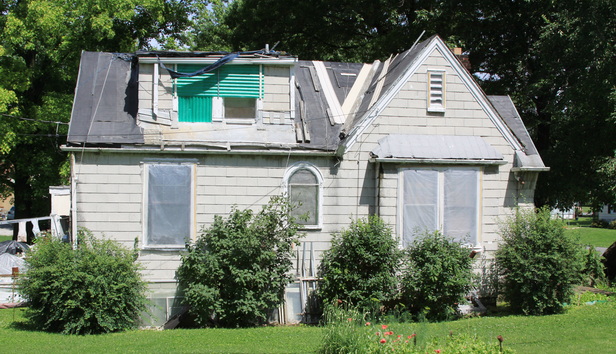
Attendees at MRSC’s recent webinar “Code Enforcement: Strategies for Effective Abatement,” a recording of which is available at our On-Demand Webinars, asked how local jurisdictions can effectively abate nuisances at “zombie” homes. This blog answers the question, providing background on this ongoing problem and exploring the solutions available to local code enforcers through state law.
The Zombie Home Problem and the Legislative Response
In legal terms, zombie homes are residential properties that owners have vacated and abandoned—often amidst pending mortgage foreclosure proceedings. These vacant and abandoned properties pose several problems for local code enforcement:
- Abandoned or vacant properties are generally susceptible to trash accumulation, overgrown vegetation, trespassers and criminal activity, and other nuisance conditions.
- Local code enforcement abatement strategies like infractions and correction notices rely on the property owner’s involvement and cooperation, which is difficult to achieve with owners that have entirely abandoned the property.
- Many lenders became unwilling to assist local nuisance abatement efforts at owner-abandoned properties following the Washington Supreme Court’s 2016 decision in Jordan v. Nationstar Mortgage, LLC, which held that deeds of trust give mortgage lenders no legal authority to “enter, maintain and secure” a debtor’s property before foreclosure is completed. Foreclosure proceedings can take months or longer, which can only exacerbate ongoing nuisance conditions at a zombie property in the interim.
Recognizing these problems, the state legislature passed HB 2057 in 2018. The final bill report for the legislation specifically addressed the impact of the Jordan case on this issue.
HB 2057 created chapter 7.100 RCW, giving both local governments and mortgage lenders additional legal tools to abate nuisances at owner-abandoned homes that are pending foreclosure. The nuisance abatement procedures in chapter 7.100 RCW supplement and do not limit other legal nuisance abatement authority available to local code enforcement (See RCW 7.100.900).
How Chapter 7.100 RCW Applies to Abandoned Property Nuisances
Chapter 7.100 RCW allows nuisance abatement at residential real properties (essentially single-family homes or condominium units) that are abandoned and in mid-foreclosure.
A property is “abandoned” if it outwardly shows at least three of the abandonment indicators listed in RCW 7.100.010(2)(a), which include (among others) disconnected utilities, accumulated trash or mail, and broken exterior doors or windows.
A property is in “mid-foreclosure” if a deed of trust beneficiary (usually a lender or its designee) has started Chapter 61.24 RCW foreclosure proceedings either by issuing the debtor a notice of default or pre-foreclosure options or by recording a notice of trustee’s sale with the county auditor.
RCW 7.100.010(2)(c) defines “nuisances” subject to abatement under chapter 7.100 RCW as those declared in Chapter 7.48 RCW or in a property jurisdiction’s local code.
The Nuisance Abatement Process for Abandoned Properties in Mid-foreclosure
Either local government (via code enforcement) or an abandoned property’s mortgage servicer can abate a nuisance under chapter 7.100 RCW.
A “mortgage servicer” is an agent for a lender that manages daily mortgage loan management. Mortgage servicers are identified on the first page of a foreclosure notice of default on the property. See RCW 61.24.030(8)(m)(ii).
When the process is intiated by the local government
RCW 7.100.020 allows code enforcement to start the process by giving the mortgage servicer an affidavit or declaration stating that the property meets the above “abandoned, mid-foreclosure and nuisance” definitions.
The affidavit or declaration must be accompanied by date- and time-stamped photos of the observed abandonment indicators (e.g., accumulated trash, broken windows, etc) as well as copies of applicable issued or recorded foreclosure documents. A jurisdiction must submit this affadavit and additional materials to the mortgage servicer by certified mail.
When the process is intiated by the mortgage servicer
The mortgage servicer can also start the abatement process under RCW 7.100.030 by requesting the code enforcement jurisdiction’s determination that a property is abandoned and a nuisance. The servicer’s request must also include copies of applicable foreclosure documents, similar to those required when a local government initiates the process.
Jurisdictions must respond to a mortgage servicer’s request within 15 calendar days of receipt of documents. The response must include the same affidavit or declaration discussed above if the jurisdiction determines the property qualifies for nuisance abatement under chapter 7.100 RCW.
In either case, RCW 7.100.040 empowers the mortgage servicer to enter the abandoned property and abate the observed nuisance conditions once it receives a code enforcement’s affidavit or declaration. Jurisdictions cannot be held liable for damages caused by a mortgage servicer’s abatement efforts—see RCW 7.100.040(8).
If a mortgage servicer finds the property occupied when it enters for abatement, it must immediately leave and notify the jurisdiction. A servicer also cannot enter a property if the borrower notifies it that the property is not abandoned. See RCW 7.100.040(6) and (7).
A jurisdiction can undertake its own abatement efforts if the mortgage servicer fails to abate the nuisance within the timeline established by the jurisdiction—unless the servicer was prevented from taking action because the property was occupied or not in fact abandoned. See RCW 7.100.050.
Recovering Abatement Costs
RCW 7.100.070 gives jurisdictions abating abandoned property nuisances an assessment lien against the property for their abatement costs (which do not include fines or penalties).
This lien binds future owners of the property once it’s recorded with the county, and it ranks equally with state and local property tax liens against the property for purposes of payout of foreclosure sale proceeds.
Practical Questions and Tips
Here are a few common questions local governments often have regarding abandoned homes and the abatement process.
How does a property qualify as being abandoned?
A code enforcement jurisdiction must outwardly observe at least three of the indicators listed in RCW 7.100.010(2)(a) for a property to qualify as “abandoned.” This raises a few questions:
- How much observation is sufficient?
- Is observing an indicator once on a single visit to the property enough?
- How soon after its observations should the jurisdiction serve its affidavit on a mortgage servicer?
Unfortunately, chapter 7.100 RCW does not directly address these questions. The needed observation and its timing in relation to the affidavit may vary depending on the specific abandonment indicator involved.
Ensuring that observed abandonment indicators are reasonably confirmed (through separate property visits when feasible) and promptly submitted to the mortgage servicer are good general practices in moving the abatement process forward.
Must mortgage servicers send requests directly to code enforcement?
RCW 7.100.030 requires jurisdictions to respond to a mortgage servicer’s nuisance determination request within 15 calendar days. Are servicers required to send their requests directly to code enforcement?
RCW 7.100.030 states only that servicers can contact “a county, city or town” regarding a nuisance property, so a request could theoretically be generically addressed to the jurisdiction as a whole, and not simply the code enforcement division.
Accordingly, local governments should establish a practice for directing such requests to the appropriate code enforcement officials, particularly if your jurisdiction has a large or complex internal bureaucracy (Doing so can help your jurisdiction stay in compliance with the 15-day deadline).
How should local governments handle occupied properties?
RCW 7.100.040(6) prohibits mortgage servicers from abating a nuisance if the property thought abandoned turns out to be occupied. Is code enforcement likewise prohibited from abating a nuisance under chapter 7.100 RCW if it discovers occupants at the property?
Technically, occupied properties are not “abandoned” as defined in RCW 7.100.010(2)(a), so, like mortgage servicers, local governments also cannot abate nuisances under chapter 7.100 RCW authority if they discover occupants at the nuisance property.
That said, chapter 7.100 RCW supplements a jurisdiction’s nuisance abatement authority, and jurisdictions facing occupied nuisance properties can still abate the nuisances under other legal authorities and procedures, such as those in Chapter 7.48 RCW or in their own local nuisance codes.
However, local governments should proceed with caution. Abating nuisances at occupied properties can create a risk of physical altercations and/or property damage during the abatement process. A good practice when dealing with occupied properties is for the jurisdiction to first obtain a superior court abatement warrant that specifically authorizes the reasonable use of force to enter the property and remove occupants (as necessary), such that the jurisdiction can accomplish the abatement as necessary.
Conclusion and Resources
Local governments should note that chapter 7.100 RCW does not require the adoption of a local ordinance before abating nuisances under this chapters; rather, jurisdictions may use existing statutory provisions to respond swiftly to zombie home concerns.
Here are additional MRSC resources on the subject of abandoned or vacated properties:
MRSC is a private nonprofit organization serving local governments in Washington State. Eligible government agencies in Washington State may use our free, one-on-one Ask MRSC service to get answers to legal, policy, or financial questions.

About Harry Boesche
Harry Boesche joined MRSC as a legal consultant in 2024. Prior to this, he was the Deputy City Attorney for the City of Auburn for 17 years.
His municipal law practice includes advising elected officials and appointed board and commission members on public records act and open government issues.


