
Better Together: The Power of Intergenerational Programs and Housing Models
August 24, 2026
by
Lisa Pool
Category:
Housing
,
Health and Human Services
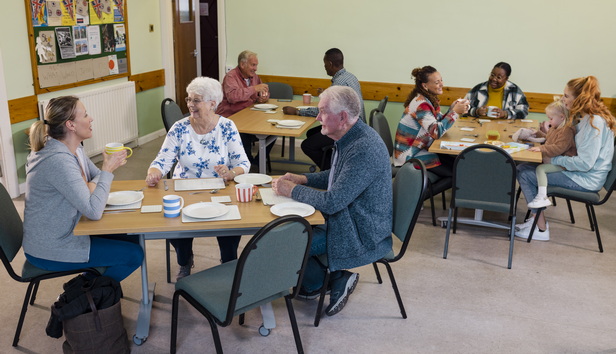
Washington faces two parallel demographic realities: a rapidly growing senior population and a large population of children and young adults. More than 1.8 million Washingtonians are already aged 60 or older and approximately 2.33 million residents are under the age of 25.
Rising housing costs and social isolation affect both older and younger generations. Intergenerational housing options and social programs that connect older and younger generations can help communities address not only housing affordability and loneliness, but also healthy aging, childcare access, and community engagement.
In this blog, I’ll provide some local examples and ways in which communities can support multiple generations simultaneously through intergenerational housing models and youth-senior programs.
Multigenerational Versus Intergenerational
According to a 2026 Harvard University symposium titled A Cultural Shift Toward Living Together by Design, multigenerational and intergenerational are not interchangeable terms. Multigenerational typically refers to two or more adult generations of a family living together, sometimes three—when children are included—within a single household, whether by choice or necessity.
By contrast, intergenerational involves intentional interaction between unrelated people of different ages. While all intergenerational living is multigenerational, the reverse is not necessarily true. This blog primarily uses the term intergenerational.
Many intergenerational connections occur naturally, but local governments can help create the conditions that make them easier by updating zoning regulations, supporting innovative housing models, partnering with nonprofits and educational institutions, and facilitating programs that bring together community members of different ages.
Intergenerational Housing Models
Across all Washington households, 33.5% are housing “cost burdened,” which is defined as spending more than 30% of household income on housing costs. Harvard University's symposium highlighted several intergenerational housing options as solutions, including homesharing, accessory dwelling units (ADUs), middle housing, co-living, cohousing, cooperatives, and purpose-built intergenerational housing.
These housing models have the potential to house multiple generations, and some include shared common spaces like kitchens, dining areas, and outdoor amenities that allow for regular interaction across age groups. I will cover some of these housing types below.
Accessory dwelling unit (ADU)
ADU arrangements are sometimes referred to as lifecycle housing strategy; whereby aging relatives may move from the main home to the ADU as they age. ADUs can also be purpose built by families to house aging parents who would otherwise live alone or in a senior living facility or young adults entering the workforce.
See our webpage on Accessory Dwelling Units for examples of local codes.
Co-living
Co-living (also known as single-room occupancy buildings, congregate living facilities, or boarding houses) often resemble traditional multifamily housing from the outside. However, they typically feature smaller private bedrooms and shared common areas.
Local governments in Washington State are now required to allow co-living housing in certain circumstances pursuant to RCW 36.70A.540. In 2024, the legislature passed HB 1998 requiring cities and counties to allow co-living housing development on any lot that could accommodate up to six multifamily units based on the underlying zone by December 31, 2025.
In response, Kirkland adopted Ordinance O-4912 last September to conform with the law, and many other communities have also amended their codes, including Spokane, Puyallup, and Bellevue.
For more on co-living, see our webpage on Affordable Housing.
Homesharing
Homesharing is a newer term for a long-standing housing arrangement in which people live with non-relatives. While the concept itself is not new, modern homesharing services connect homeowners with individuals seeking affordable housing, companionship, or mutual support.
These types of arrangements can be fostered by various organizations and agencies—from higher education to local governments. For example, Brookings reported on a university-community homesharing collective that helps low-income students and older adults connect and access affordable housing in West Philadelphia.
Local governments can support homesharing programs through public outreach and partnerships. For example, Bellingham’s Home Sharing Program matches interested Whatcom County homeowners with people seeking affordable housing.
While the city promotes and supports the homeshare matching platform, Nesterly hosts it and manages all the practicalities, including user verification, background checks, secure automated payments, and customizable rental agreement forms.
City staff estimate there are around 4,000 to 10,000 empty bedrooms in Bellingham. Taylor Littrell, a development specialist with the city told me:
We are happy to be able to provide the community with this supportive rental option that builds social connections and increases financial independence for both homeowners and renters. We already have several home share matches and are eager to continue growing the program
Although limits on the number of unrelated individuals sharing a home have been an obstacle to homesharing in some states, Washington cities, towns, and counties are prohibited from imposing such caps (see RCW 35A.21.314, RCW 35.21.682, and RCW 36.01.227).
Purpose-built intergenerational housing
Purpose-built intergenerational housing brings together residents of different ages through community-oriented design, shared spaces, and coordinated programming. These developments promote affordability, support aging in place, strengthen social connections, and create opportunities for mutual assistance across generations.
For example, San Diego State University (SDSU) is developing 250 apartments for older adults as part of its commitment to serving an “intergenerational SDSU community.” The project will feature shared gathering spaces, opportunities for lifelong learning, and a walkable, transit-accessible neighborhood designed to foster interaction between older residents and the broader university community.
Youth-Senior Programs
According to Generations United, nearly 92% of Americans believe intergenerational activities (e.g., technology mentoring, arts, and music programs) and shared recreation and wellness activities reduce loneliness across all ages. For children and young adults, such programs provide mentoring opportunities, exposure to different life experiences, and meaningful relationships with older adults outside their immediate families.
A recent skills exchange in Sedro-Woolley offers a local example of intergenerational connection in action. Approximately 30 seniors between the ages of 60–85 and more than 100 students ages 16–17 participated in an event called “Ageless Intelligence.” Facilitated by a Skagit County teacher, the event brought participants together to share technology skills, life experiences, and mentorship opportunities.
Another approach is through the co-location of facilities, such as Generations Early Learning & Family Center in Bellingham. Since the 1980s, the center has combined an early childhood education program with a residential care facility, fostering ongoing relationships and shared experiences among children, older adults, families, and staff. The center produced a video about the program and participants’ experiences.
Notably, SB 5655 (passed in 2025) requires local governments to reduce regulatory barriers for childcare facilities by permitting them in a wider range of zones and easing certain building code requirements for locating childcare uses in existing buildings. For more information, see our blog series on 2025 legislation related to childcare facilities.
Conclusion
This blog highlights just some of the many ways local governments can foster meaningful intergenerational connections. Central to all of these approaches is partnerships with senior centers, area agencies on aging, schools, nonprofits, and other local organizations.
Land use planning strategies such as complete neighborhoods and 10-minute neighborhoods are foundational to these connections by integrating housing, services, and community gathering spaces within walkable areas.
As communities across Washington plan for both an aging population and the needs of younger generations, they can use these strategies to help reduce social isolation, strengthen community ties, and enhance the quality of life for residents of all ages.
MRSC is a private nonprofit organization serving local governments in Washington State. Eligible government agencies in Washington State may use our free, one-on-one Ask MRSC service to get answers to legal, policy, or financial questions.

About Lisa Pool
Lisa Pool joined MRSC in June 2021. Most recently, she served as a senior planner for Bellingham. In this role, she primarily focused on long-range planning projects, including the city’s comprehensive plan and new housing regulations. Prior to moving to Bellingham, she worked on regional sustainability and transportation issues for a metropolitan planning organization and conducted development review for cities and counties in the Midwest.
Lisa holds a Bachelor of Arts in environmental policy and a Master of Urban Planning, both from the University of Kansas in Lawrence. She has been a member of the American Institute of Certified Planners since 2009.


