
Regulating Vehicles Used as Residences: What Can Local Governments Do?
October 26, 2026
by
Harry Boesche
Category:
Homelessness
,
Automobile Nuisances
My recent blog, When Homes Are Abandoned but Problems Remain: Abating Nuisances at Zombie Homes, addressed a common question MRSC received about “zombie homes” following our Code Enforcement: Strategies for Effective Nuisance Abatement webinar.
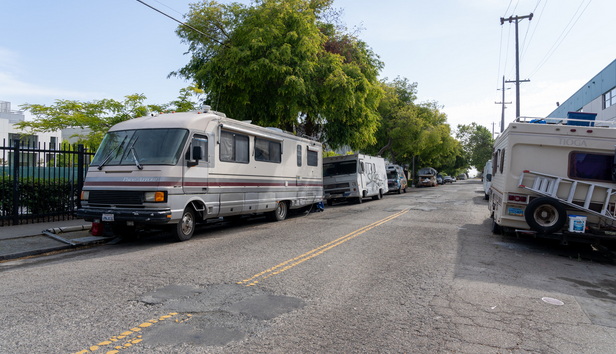
This blog examines another question that the webinar’s attendees also raised: Can localities prohibit and/or impound and remove vehicles that are also used as residences?
The short answer is “yes,” but like many legal questions the longer answer is more complex and subject to several legal and practical considerations. This blog examines this question and outlines local government options to regulate and remove vehicles used as residences, which vary depending on whether a vehicle is located on public or private property.
When Vehicles Are on Public Property
Both state and local laws allow local governments to regulate vehicle parking and to remove unlawfully parked vehicles from public property (like publicly owned or controlled streets, alleys and parking lots).
RCW 46.55.080 and RCW 46.55.085 allow local governments to impound and remove unauthorized vehicles from rights-of-way and other public locations, and RCW 46.55.010(14) defines “unauthorized vehicles” to include those parked beyond specified time limits on highways or at public parking facilities.
In addition, authorities like RCW 46.55.240(1)(a) and Kimmel v. Spokane (1941) also allow local governments to establish their own parking restrictions and to impound and remove vehicles parked in violation of such restrictions. Local governments commonly exercise this authority, and vehicle parking in cities, towns, and counties is accordingly often regulated primarily by local ordinances.
Under this authority, some jurisdictions specifically prohibit overnight parking or camping in vehicles at public locations. For example, Burien Municipal Code Sec. 10.15.100(3) and Olympia Municipal Code Sec. 10.16.035 prohibit camping in parked vehicles on public property, and Auburn City Code Sec. 10.36.191 prohibits occupying an RV overnight while parked in a public right-of-way.
Other agencies allow overnight or extended vehicle parking—but only by permit—while others enact general limits on vehicle parking times and locations that simply make it difficult or impossible to reside in vehicles parked on public property.
But despite broad local authority over vehicle parking, local governments must adhere to certain minimum notice, hearing, and owner redemption procedures in RCW 46.55 when impounding and towing vehicles from public locations and must adopt those procedures into their local impoundment and towing ordinances before enforcing them. See RCW 46.55.240(1).
What happens when the vehicle is also used as a residence?
Currently no legal authority prevents local governments from enforcing public parking restrictions against vehicles used as residences, and, in fact, one local example of that enforcement scenario survived significant court challenges.
In Potter v. City of Lacey (2024), the Washington Supreme Court examined city ordinances imposing a four-hour parking limit for RVs, trailers, and similar vehicles in public rights-of- way and public parking lots. Plaintiff Potter lived in a trailer parked in the city hall parking lot and he sued the city, asserting that the ordinances violated his state constitutional right to travel (which he argued also implicitly granted him a right to reside on city property).
The Potter court disagreed and upheld the ordinances against Potter’s challenge, ruling that no legal authority supported his claimed right to reside in a vehicle parked indefinitely in a city parking lot. Potter also challenged the ordinances in federal district court on the ground that they violated his right to free association and the prohibition against cruel and unusual punishment. The federal court also rejected those challenges in opinions it issued in February and March of 2021.
City of Seattle v. Long (2021) is another important court decision in this area. It holds that impounded vehicles “occupied as principal residences” qualify for legal homestead protection. This protection means that unless the value of these vehicles exceeds the RCW 6.13.030 exemption amount, they cannot be withheld from their owner-occupants until impound and towing fees are paid or sold at auction to recover the fees.
The Long decision does not strictly prohibit local governments from impounding and towing vehicles used as residences, but its fee recovery restrictions can raise practical and financial challenges for jurisdictions seeking to remove such vehicles from public property.
Older MRSC blogs, City of Seattle v. Long: Vehicle Homestead Rights and Excessive Fines and Living in Vehicles: How Homestead Rights Affect Municipal Impounds, contain additional information about the impact of the Long decision on local governments. In addition, the City of Seattle continues to grapple with the Long decision’s practical implications in its efforts to regulate overnight RV parking in the city.
When Vehicles Are on Private Property
Local government vehicle parking regulations generally do not apply to vehicles parked on private property. Instead, a local government’s ability to regulate vehicles on private property stems primarily from its power to define and abate nuisances, which can include vehicles on private property that meet certain legal criteria.
For example, RCW 46.55.240(2) allows local governments to adopt ordinances permitting the removal of junk vehicles (or vehicle parts) from private property as public nuisances, and RCW 42.55.010(5) defines “junk vehicles” as those meeting certain age, condition and value criteria.
Importantly, state law requires local junk vehicle removal ordinances to include the notice and hearing provisions in RCW 46.55.240(3). Further, local ordinances cannot apply to vehicles that are enclosed lawfully and completely in buildings, rendering them not visible from the street or other property. See RCW 46.55.240(3)(c).
Vehicles parked on private property can also become legally defined nuisances when (for example) they violate a local jurisdiction’s health or safety codes. City of Spokane Valley v. Dutton (2024) illustrates a city’s successful enforcement of its nuisance ordinance to remove three junk vehicles visibly located on private property.
Additional Thoughts and Recommendations
This blog addresses a common question about the authority of a local government to regulate vehicles that are being used as residences. Addressing such vehicles may involve not only a vehicle itself, but also the person or persons residing in them and the belongings stored within.
Jurisdictions should consider the following when impounding and towing vehicles used as residences:
- Law enforcement involvement. Impounding and towing vehicles may require physically removing vehicle occupants. Jurisdictions should consider when to involve law enforcement so that removing occupants and towing the vehicle can be accomplished safely and lawfully.
- Services and outreach. Persons living in vehicles may need housing resources, substance abuse treatment, mental health services, or other outreach. Enforcing parking restrictions against vehicles used as residences can mean separating a vehicle’s occupant from their only home, so jurisdictions should consider the occupant’s need for such services and how to connect them with needed resources.
- Personal belongings. Persons living in vehicles may also have extensive personal belongings stored in the vehicle with them. When impounding and towing these vehicles local governments should develop processes to ensure that any personal property in the vehicle is handled, stored, and returned in accordance with the minimum requirements in RCW 46.55.090.
MRSC is a private nonprofit organization serving local governments in Washington State. Eligible government agencies in Washington State may use our free, one-on-one Ask MRSC service to get answers to legal, policy, or financial questions.

About Harry Boesche
Harry Boesche joined MRSC as a legal consultant in 2024. Prior to this, he was the Deputy City Attorney for the City of Auburn for 17 years.
His municipal law practice includes advising elected officials and appointed board and commission members on public records act and open government issues.


