
To Protect Communities, Washington Towns and Cities Ban Crypto Kiosks
July 22, 2026
by
Leah LaCivita
Category:
Law Enforcement
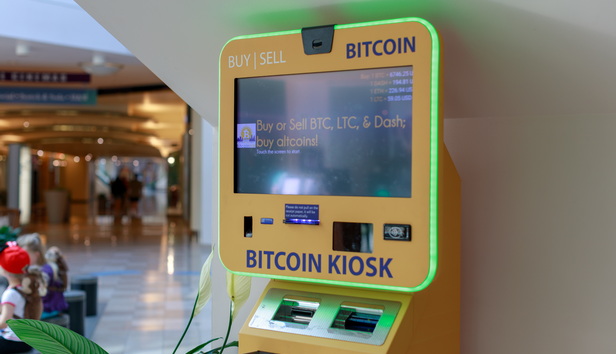
For many victims of crypto fraud, the nightmare begins in the form of an urgent phone call, text, or email. The contact may say they are from law enforcement, or a bank, or they might sound like a loved one who needs help. A crisis is introduced, and only a large sum of money can “fix” the problem.
Traditional financial institutions like banks have evolved ways to spot these schemes and staff will often intervene to help a victim if fraud is suspected. However, today’s scammers have found the perfect tool for avoiding detection: a self-serve kiosk in a convenient location (grocery and convenience store, gas station, retail location) that looks like a standard ATM but does not connect to any bank, does not require support from another person to use, and only allows a person to buy or sell cryptocurrency (crypto).
This blog looks at how crypto kiosks are being used to defraud victims, and the few jurisdictions that have enacted bans on such kiosks to protect community members.
What Is Crypto?
The Washington State Department of Financial Institutions (DFI) primer on virtual currency and digital assets defines crypto as " a virtual currency in which transactions are verified and records maintained by a decentralized systems using cryptography, rather than by a centralized authority."
Crypto can be purchased using real (also known as ‘fiat’) currency through a trading platform (e.g., Vanguard), an online crypto exchange, a mobile app, and in-person platforms like crypto kiosks. For someone not familiar with digital currency, a kiosk is the easiest way to buy crypto; A person does not have to go through a lengthy account verification process and only needs cash or a credit card to operate it.
The most common crypto kiosk operators in Washington are CoinStar, Bitcoin, RockItCoin, LibertyX, and CoinFlip. Businesses hosting kiosks are either paid rent or a percentage of earnings.
How a Scam Involving Crypto Kiosks Works
When a scammer contacts a victim, they often pretend to be from a trusted institution and, in some cases, may have enough personal information, such as the victim’s bank, mortgage company, credit card provider, or local utility, etc., to seem legitimate.
The scammer will then tell the victim an emergency has happened (e.g., a bank account has been compromised) and immediate action is required (i.e., payment of fee/fine), creating a sense of urgency and fear.
The victim is sent to a local crypto kiosk to pay the ‘fee/fine’, but in reality, they are simply purchasing crypto, which is quickly transferred to the scammer’s digital wallet through a QR code or some other method. Often the scammer talks the victim through the steps via phone, up until the minute the crypto appears in their digital wallet.
Crypto kiosk transactions are instant, nonrefundable, and lack the fraud protections that cover transactions involving fiat currency. Though the DFI’s Policy Statement, UMSA-24-PS01 (2024) requires crypto kiosk hosts post a notice cautioning users of the potential for scams, such disclosures are easily overlooked, especially when a person is under pressure.
The federal Internet Crime Complaint Center (IC3) received more than 13,400 reports of crypto-kiosk-related fraud in 2025, with losses exceeding $388 million nationwide. That more than half of these complaints were filed by individuals over the age of 50 has made this a priority topic for the American Association of Retired People (AARP), which is advocating for regulations targeting crypto kiosks at the national, state, and local levels.
A Stalled State Effort
While three states have enacted outright bans and eight others restrict the use of crypto kiosks, the closest Washington State has come in taking action is SB 5280. This bill would have established daily transaction limits and fee restrictions, but it died in committee during the 2026 legislative session.
Local Crypto Kiosk Bans
In the absence of state regulations, four Washington cities and one town have enacted local bans on crypto kiosks—Spokane, Spokane Valley, Kennewick, Anacortes, and La Conner.
Spokane—leading the effort
According to CNBC, Spokane was one of the first and largest U.S. municipality (population: 470,000) to ban crypto kiosks when it did so in June 2025.
After being alerted to the alarming rise of crypto-kiosk-related fraud in Spokane and surrounding areas, city leadership initially lobbied the state to adopt some regulations, but when a bill failed to materialize, the council moved forward on its own.
There were an estimated 50 kiosks in Spokane when the council adopted ordinance no. C36704, banning crypto kiosks and giving hosts 60 days to remove them from their premises. Violation of the ban can result in a canceled or revoked business license and a $250 penalty (a class 1 civil infraction under RCW 7.80.120).
The ordinance added chapter 10.90 to the city’s municipal code and set the tone for bans adopted elsewhere.
Spokane Valley
As testimony from local law enforcement was crucial in moving a ban forward in Spokane, it was the same for Spokane Valley.
In a January 20th presentation to the city council, police described how 20 city-based crypto kiosks were connected to 10 fraud cases from 2023-2025, including one that led to a victim taking their life after losing $300,000.
On May 5, 2026, the city council passed ordinance no. 26-005, banning cryptocurrency kiosks by a unanimous vote and adding chapter 7.60 to Title 7: Health and Safety.
Hosts were given 30 days—the shortest period of all bans—to remove existing kiosks or risk losing their business licenses and incurring a fine of $250.
Kennewick
When the Kennewick City Council first took up the issue of crypto kiosks early this year, there were 76 across the Tri-Cities, with 16 in Kennewick.
During the March 10 city council workshop meeting, Kennewick police reported on $923,771 in losses from 37 local crypto-fraud cases going back to 2023, and one councilmember described how a good friend had been the victim of crypto fraud.
After researching whether kiosk hosts had enacted any measures to protect users from fraud (they had not), the council eventually passed ordinance no. 26-6177, adding chapter 6.09 to the municipal code under Title 6: Licenses.
Kennewick’s approach includes the longest grace period for kiosk removal: 180 days. The council had initially considered a 60-day period but extended it, possibly to allow hosts more time to find alternative revenue sources and/or to plan for lost foot traffic.
Kennewick’s regulations do not include monetary penalties for violators, though hosts can have their business license revoked or canceled.
Anacortes
In a unanimous vote, the Anacortes city council banned crypto kiosks in late April, calling out the disproportionate impact of crypto fraud on the elderly and noting that 32% of the local population is over the age of 65.
Anacortes Municipal Code chapter 5.42 (see Title 5: Business Licenses and Regulations) makes hosting or operating a crypto kiosk a class 1 civil infraction punishable with a $500-per-day fine (the largest among all penalties) and termination of the host’s business license.
Hosts were given 60 days to remove existing crypto kiosks from their premises.
La Conner
With the passage of ordinance no. 1272, the La Conner Town Council unanimously approved a ban on crypto kiosks on June 9. Existing kiosks must be removed within 90 days, and violations may result in a revoked or canceled business license.
When the ordinance passed, La Conner was aware of only one kiosk operating in the town but framed the ban as a public safety measure, motivated in part by testimony from a local business owner and victim of crypto fraud.
The ordinance adds chapter 5.30 to Title 5: Business Licenses and Regulations.
Observations
That most bans passed unanimously suggests there is broad political consensus on the threat posed by kiosks, likely bolstered by compelling evidence of harm, especially from victim statements.
Broadly, the ordinances include similar language:
- Crypto-related fraud is a growing problem and targets vulnerable populations.
- Victims are explicitly directed to crypto kiosks to facilitate transactions.
- Transactions conducted via kiosks are irreversible.
- Crypto fraud is particularly challenging for local authorities to investigate.
Also, the bans target physical kiosks, and almost all note they do not apply to individual crypto ownership and/or crypto transactions conducted via apps, websites, or online exchanges. As Anacortes councilmember T.J. Fantini commented during a meeting:
We are not outlawing the trading of cryptocurrency in Anacortes…If you want to trade cryptocurrency in-home, at your computer or on your phone in the park, you can still trade cryptocurrency.
What’s Next?
Airway Heights is currently weighing a ban on kiosks, with a final vote expected in July. While there have been no local reports of crypto-kiosk fraud, city manager Albert Tripp couched it as a public safety measure meant to prevent any future episodes.
Until Washington state legislators can come to an agreement on statewide restrictions, cities and towns concerned by crypto fraud will have to take local action.
Spokane Police Detective Tim Schwering, who has spoken on crypto fraud to the public, the state legislature, and other city councils is willing to be a resource. Another resource is AARP's Washington Fraud Prevention program, which organized testimonies on behalf of a ban in La Conner.
MRSC is a private nonprofit organization serving local governments in Washington State. Eligible government agencies in Washington State may use our free, one-on-one Ask MRSC service to get answers to legal, policy, or financial questions.


