skip navigation

MRSC Insight Blog


Posts for Leah LaCivita

Planning for Summer Events: World Cup Edition

Public agencies wanting to host special events in conjunction with the 2026 World Cup will need to incorporate unique considerations into their event planning, such as how to avoid trademark violations or whether to apply for new expanded alcohol service areas. 

Read more

Essential Records: Washington’s Blueprint for Government Continuity

When disaster strikes, it is important for a local government to know how to respond as well as to resume critical operations safely and efficiently. Essential records can help in disaster response as well as recovery, but they must be identified and properly protected.

Read more

Got Clean Energy Projects? Free Program Helps Local Agencies Recoup Some Program Costs

Supported with funding from the state Climate Commitment Act, the Washington CETCAP program has helped more than 200 organizations, including King County and the Snohomish PUD install clean energy projects, unlocking hundreds of thousands of dollars in federal incentives.

Read more

A Peek Behind the Pitch: Washington Local Governments Prepare for the World Cup™

As summer approaches, communities across the state are working hard to ensure the 2026 FIFA World Cup™ is an opportunity to showcase local spirit and culture, bring resources to businesses, strengthen community ties, and invest in public infrastructure. 

Read more

Rolling Rules: How Washington Local Governments Influence Food Cart Operations

Food carts offer mobile vendors a low-cost, low-barrier way to enter into the food business. How can Washington local governments balance public health, safety, and local planning needs while also encouraging mobile food entrepreneurship? 

Read more

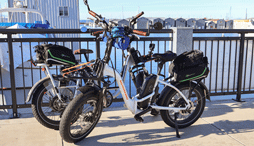
Does Your Code Take E-Bikes and E-Scooters Into Account?

While state-based regulations regarding electric-assist bicycles and scooters are available for local agencies to consider, there may be good reasons to develop more tailored local codes, especially when it comes to parking, trail/sidewalk access, and helmet use. 

Read more

Nurse Navigator Programs Help Address 911 Overuse

Some 911 systems have implemented a program to better manage low-acuity, non-emergency calls, which can free up dispatches and first responders for handling life-threatening emergencies. 

Read more

Building Trust and Transparency in Local Government Through Citizen Academies

Local governments interested in increasing transparency and building trust with the community may want to consider developing a community academy. Such programs can show participants how local decisions are made, where public funds are spent, and how they can get more involved. 

Read more

Can AI Support Good Government? Some Pilot Programs Suggest Yes

State and local governments in Washington State and elsewhere are using AI to manage traffic control, improve emergency response, analyze law enforcement training, model foot traffic, prevent homelessness, and detect wildfires, among other things. 

Read more

MRSC logo with 90th anniversary language

MRSC's 90th Anniversary Celebration: How Local Governments, Partners Helped MRSC Through Challenging Times

MRSC is celebrating 90 years of providing trusted guidance to Washington local governments, but not without encountering a few bumps along the way. Thanks to the dogged support of local governments and institutional partners, we've weathered these bumps and come out stronger. 

Read more

A woman sits on a bench in the hot sun

Adapting to Extreme Heat: Can Cities Prepare for a Hotter Future?

Global temperatures are projected to warm by 2.7 degrees Fahrenheit by 2050, raising the risk for heat-related illness and death to occur. Some cities and counties are making plans to keep communities safe and taking action to mitigate heat-related impacts.

Read more

Local Water Systems Grapple with 'Forever Chemicals'

Forever chemicals, or PFAS, have been detected in water systems across the state thanks to mandatory testing requirements that began in 2023. What are local agencies doing on both a short-term and long-term basis to address the problem?

Read more

Wildfire under an electrical transmission line in a forested area

State-Based Efforts, Legislation Boost Local Risk Reduction, Resiliency to Wildfires

With wildfire season underway, local governments should be aware of bills passed during the 2023 Regular Legislative Session addressing wildfire events and proposed permanent rules to protect outdoor workers from wildfire smoke.

Read more

A thermometer showing a temperature of 100+ against a background of an urban street

Protecting Communities When the Heat Is On

How can local agencies prepare for extreme heat events, including protecting those populations most vulnerable to heat-related illnesses and death? By looking carefully at how heat impacts various neighborhoods, an agency can take a variety of approaches to maximize services. 

Read more

An EMS personnel helping an older resident with medication in a home-based setting

Fire Departments Expand Services to Reach 911 Frequent Callers

With a goal of reducing non-emergency calls to 911 and limiting costly, unnecessary trips to the emergency room, several fire departments in Washington State have begun mobile health programs that provide coordinated follow-up care to patients after a 911 response has occurred. 

Read more

An image of 3 people at a recycling center sorting out types of recycled material

Local Governments Pursue Zero-Waste Measures

Zero-waste measures for local governments run the gamut from multi-year materials management projects to consumer education on how to recycle or compost properly. The end goals are to reduce greenhouse gas emissions and responsibly manage public resources.

Read more

Local Governments Prepare for Broadband Expansion

With potential new sources of funding to support the expansion of reliable broadband services, local governments across Washington are busy building partnerships, identifying un- and underserved areas, and planning equitable deployment strategies to reach all communities.

Read more

New Legislation, Guidance Targets a Green Energy Future in Washington

In a push to carbon neutrality, Washington State agencies and the legislature have put in place laws and mandates designed to reduce greenhouse gas emissions in buildings, invest in transportation alternatives, reduce waste, and expedite the approval of green energy projects.  

Read more

Fire Season Brings Renewal of Certain Worker Protections, More Action, and Funding

Temporary rules are in place to protect outdoor workers from excessive heat or hazardous air quality. Meanwhile, some local governments are adopting provisions of the International Wildland Urban Interface Code, and state and federal governments are boosting firefighting efforts.

Read more

Making Government Work Attractive

How can local governments build a strong workplace culture that engages current staff and attracts new workers? Here are some ideas, including a case study from the City of Issaquah.

Read more

LOAD MORE