
2026 Transportation Safety Laws Touch on E-Bikes, E-Motos, and Crash Prevention
September 16, 2026
by
Leah LaCivita
Category:
Cycling and Walking
,
Streets and Sidewalks
,
Traffic Regulation and Enforcement
,
New Legislation and Regulations
Editor's note: This blog has been update to clarify that SB 6110 does not create a definition for e-motos or assign e-motos a classification in existing vehicle taxonomy. Local examples of e-moto regulations have also been added.
Two transportation-related bills that took effect on June 11, 2026, are prompting local governments across Washington to rethink both roadway safety and the regulation of electric mobility devices.
While SB 6066 creates a new framework for addressing dangerous road corridors through crash prevention zones, SB 6110 establishes clearer distinctions between electric bicycles and electric motorcycles and is already driving changes in local codes, policies, and enforcement efforts.
SB 6110: Drawing a Clear Line Between E-Bikes and E-Motos
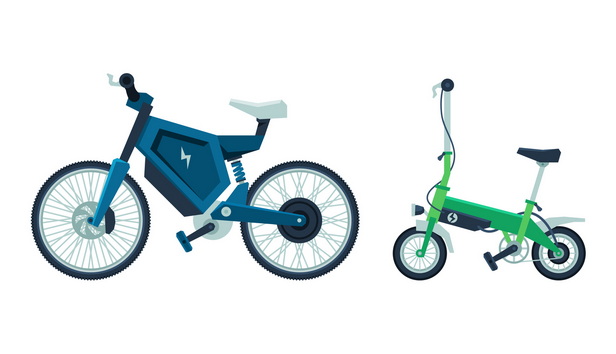
The more consequential local government issue may be SB 6110, which updates the state’s definition of an electric-assisted bicycle (e-bike), drawing a greater distinction between these and high-powered electric vehicles (often referred to as e-motos) that are often marketed as e-bikes.
Why the issue matters
State and local officials have cited rising injury rates, faster vehicle speeds, and confusion about vehicle classifications as reasons for pursuing new regulations.
Harborview Medical Center reported a sharp increase in patients treated for e-bike and e-scooter injuries between 2021 and 2025. The recent introduction and rapid growth in popularity of e-motos has led local law enforcement across the state warn users to keep these vehicles off of roadways, primarily because they may lack required safety features that make them road-ready (e.g., lights, reflectors, turn signals, mirrors, etc.)
What changes, what remains the same
The law retains three classes of e-bikes already established in RCW 46.04.169:
- Class 1: provides motor assistance only when the rider is pedaling (referred to as ‘pedal assist’) and stops assisting at 20 mph.
- Class 2: powered by the motor alone (i.e., ‘throttle-assist’) but cannot provide assistance after reaching 20 mph.
- Class 3: provides motor assistance only when the rider is pedaling and stops assisting at 28 mph. This class must also be equipped with a speedometer.
SB 6110 furthers defines e-bikes as having fully operative pedals (meaning they can be used to propel the vehicle), a saddle/seat, two or three wheels, and a motor rated at no more than 750 watts.
SB 6110 also defines what is not an e-bike, which is any vehicle that is capable of exceeding 20 mph on electric power alone or that can be readily modified (through software or other means) to exceed the 20-mph limit. (Still confused? The Washington State Transportation Commission offers the E-Ride Guide, which takes users through a series of questions to determine what type of vehicle they have.)
The bill does not define what an e-moto is, though some vehicles sold or initially perceived as e-bikes may now no longer qualify as one.
Workgroup will address e-moto regulations
Because Washington lacks a regulatory framework for e-motos, SB 6110 directs the state department of licensing to convene a workgroup that will review e-moto licensing options, registration fees, minimum age requirements, equipment standards, enforcement strategies, penalties, marketing practices, and vehicle tampering. The workgroup's interim report is due by December 2026 and a final report by October 2027.
It remains to be seen if the state will apply more comprehensive regulations, such as those for motorcycles (RCW 46.04.330) or mopeds (RCW 46.04.304), which require both vehicle and user to be registered (thus preventing youth under 16 from legally operating these vehicles). Mopeds and motorcycles are also subject to federal safety standards.
In the absence of a clear definition, some cities have adopted local definitions and regulations regarding e-motos, including:
Local government response to SB 6110
Many jurisdictions have already begun updating codes and policies and conducting public education efforts in response to the bill.
The Everett City Council approved Ordinance No. 4190-26, which creates new categories for electric mobility devices and incorporating state e-bike classifications. Devices capable of traveling faster than 20 mph under their own power are classified as “powered personal transporters” and are generally restricted to roadways and parking lots.
There are also new helmet requirements for younger riders, age restrictions for certain vehicles, and a graduated penalty structure. Everett officials cited a significant increase in e-bike and e-scooter injuries as a driving factor behind the new rules.
Auburn adopted Ordinance No. 7029, creating a new, separate chapter specifically regulating e-bikes and e-motos, defining the latter as vehicles lacking operable pedals, exceeding 750 watts, or continuing to provide motor assistance above 28 mph. E-moto operators must be at least 16 years old and possess a motorcycle license.
The ordinance also limits where Class 3 e-bikes may operate within Auburn city limits and establishes escalating civil penalties for violations.
Meanwhile, King County launched an outreach campaign emphasizing the distinction between e-bikes and e-motos. As part of the effort, ambassadors were dispatched to busy regional trails throughout summer to educate riders on bike types and to remind them of the 15-mph limit on all county-owned multi-use trails.
Other jurisdictions, including Kirkland and Longview, have conducted education and outreach, focusing on the new state classifications and how this affects use of local trails and byways.
SB 6066: Targeting Washington’s Most Dangerous Roads
While SB 6110 addresses emerging transportation technology, SB 6066 focuses on roadway safety.
The bill authorizes cities, counties, and the Washington State Department of Transportation (WSDOT) to establish a crash prevention zone (CPZ) on any road which, over the last five years, has experienced higher-than-expected numbers of deaths or serious injuries.
A pilot CPZ will first be established along a nine-mile section of U.S. Highway 395 between Pasco and Mesa, a stretch of road that has seen more than 250 crashes since 2021 and a dozen deaths over the past decade. If the pilot is successful, the concept will be expanded to other high-risk roadways in the state (the authority will be available statewide beginning in 2029).
Jurisdictions creating a CPZ must follow nationally recognized safety analysis processes, including guidance from American Association of State Highway and Transportation Officials and the Federal Highway Administration’s Highway Safety Manual.
If a local government wants to establish a CPZ on roads crossing jurisdictional boundaries, it must obtain approval from affected jurisdictions and conduct a public hearing.
A key feature of the law is enforcement. Traffic violations occurring within a CPZ are subject to double fines (including use of a personal electronic device while driving), with the additional revenue dedicated to roadway safety improvements within the affected corridor.
Conclusion
Together, SB 6110 and SB 6066 reflect two parallel transportation priorities: deploying new tools to reduce fatalities on dangerous roads and distinguish between e-bikes and higher-powered e-motos while maintaining local flexibility to address parks, trails, sidewalks, and roadway use. Both will help to create safer roads across Washington.
MRSC is a private nonprofit organization serving local governments in Washington State. Eligible government agencies in Washington State may use our free, one-on-one Ask MRSC service to get answers to legal, policy, or financial questions.


