What Factors Increase the Likelihood Unhoused People Will Seek Out Shelters? Part One
February 28, 2024
by
Alicia Bones
Category:
Housing
,
Homelessness

In Washington, homelessness is on the rise. Recently, the Seattle Times reported on the 2023 Point-In-Time (PIT) Count, a one day-a-year project where municipalities attempt to count everyone who lacks permanent housing in their communities. According to the U.S. Department of Housing and Urban Development (HUD)-mandated count, Washington's unhoused population increased by 11% in just one year.
This local trend mirrors the national one. Across the United States, homelessness increased by 12% from 2022 to 2023.
"And it’s the sharpest year-to-year rise in Americans living in shelter, temporary housing and places not meant for human habitation like tarps, tents and vehicles," notes Seattle Times reporter Anna Patrick.
There are several types of shelter, housing, and alternative facility options for unhoused people, including emergency shelters for extreme weather, emergency/temporary housing for up to 60 days, and transitional shelters for up to two years, to name a few examples. Read MRSC's page on Homeless Shelter and Housing Options for more definitions.
Despite the increasing number of unsheltered people in Washington, not all seek out shelters for a variety of reasons. What causes this avoidance? According to Suzanne Skinner and Sara Rankin of the Seattle University School of Law, unhoused people have two types of barriers: shelter conditions (including overcrowding, theft, and fear of violence), and “requirements or rules” of shelters determining who can stay there.
Barriers to Shelters
Skinner and Rankin list barriers that may prevent or dissuade unhoused people from entering shelters. Some individuals may avoid shelters based on their past experiences, while others don't seek out this type of housing because of stories they've heard from others or societal perceptions of shelters.
These real and imagined barriers may include existing shelter conditions and rules as well as perceived worries about shelter conditions.
Conditions
Two of the most common conditions that might dissuade a person from using a shelter are:
- Too few beds: Unhoused individuals or families are turned away due to lack of space.
- Locational challenges: Shelters may be located far away from services or in areas without public transportation.
Requirements or Rules
While imposing requirements or rules for shelter use can help make operating such a site more efficient, these requirements could also restrict access. A shelter operator should carefully review its existing rules and regulations to make these do not turn away the very population it seeks to serve.
A few common limitations, restrictions, and requirements shelters may have in place are listed below:
- Family limitations: Families who want to stay together may face limited shelter options. Father-headed single families and families with older children (who may be asked to stay in adults-only shelters) are particularly at risk.
- Gender restrictions: Heterosexual couples may not be able to stay together in shelters (couples of the same gender can stay together at single-gender adult shelters). Also, transgender and gender nonconforming individuals may face discrimination or hostility.
- Age requirements: Shelters catering to specific age demographics may not have enough beds.
- Sobriety requirements: Some shelters turn away individuals with substance use problems, while others have no-tolerance policies that allow administrators to remove residents if they relapse.
- Pet restrictions: Some unsheltered people may be unwilling to enter shelters if they can't bring their pets.
Worries about Adverse Conditions
Even if a shelter does not present any visible barriers (such as those listed above), this still might not dissuade a person who had a poor experience in another facility or is generally suspicious of group housing. Such fears might include the following:
- Risk of disease: Too many people crammed into large spaces, like gyms or former warehouses, prevent adequate space between sleeping arrangements in open shelters.
- Fear of theft: Some worry their possessions will be lost or stolen if they stay in a shelter.
- Fear of danger: Shelter residents may fear harm from vermin, other residents, or non-residents. Some unsheltered women worry about sexual assault in and outside of shelters but are less likely to report violence to police.
Certainly, financial restrictions, staffing, and safety concerns may prevent entirely barrier-free design. For instance, admitting residents under the influence of drugs or alcohol can be a safety issue for other guests, staff, volunteers, and neighborhoods. Many shelters have codes of conduct that include rules around issues like harassment, weapons, and other welfare concerns.
Creating Barrier-Free Shelters
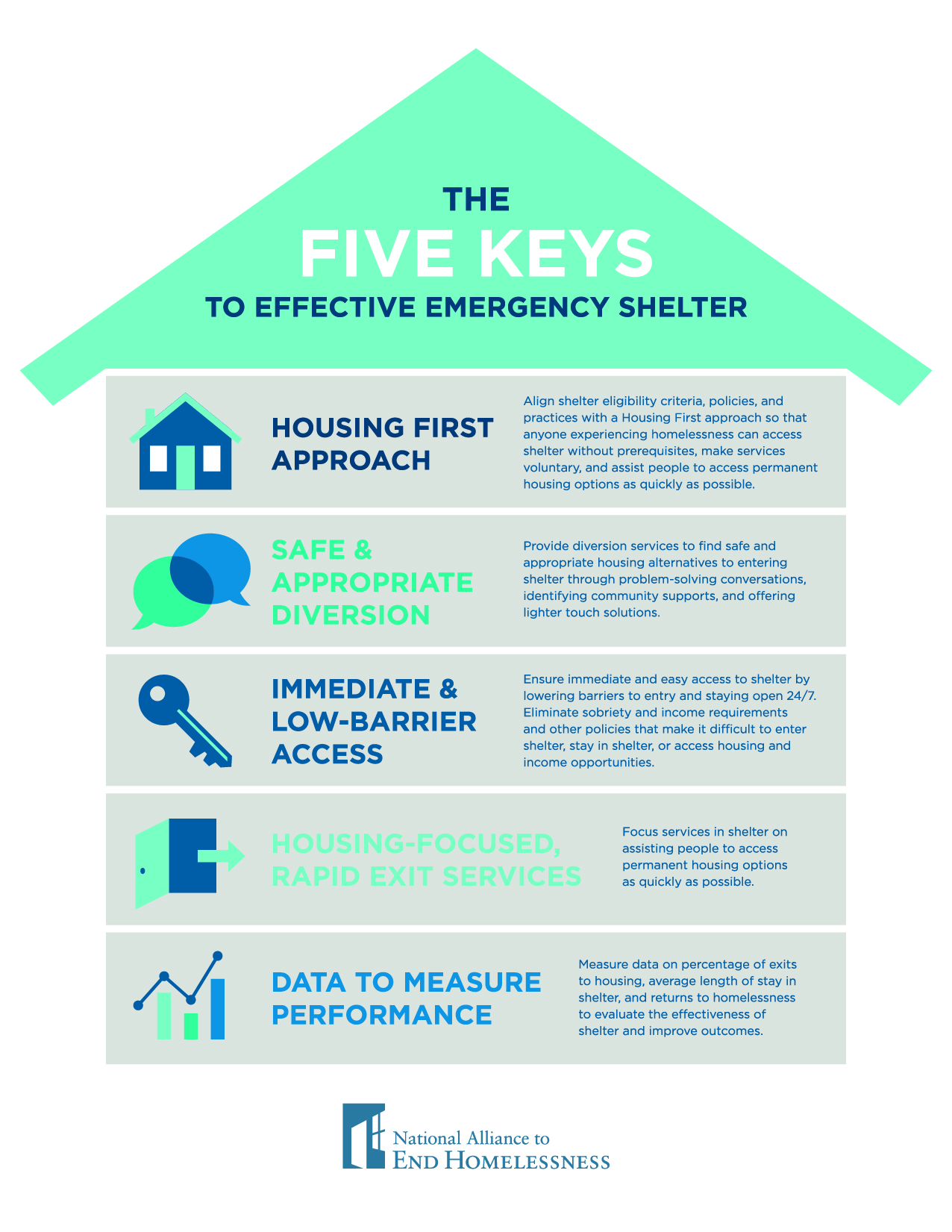
Though some admission restrictions may be necessary, the National Alliance to End Homelessness (the Alliance) has outlined its strategies for eliminating shelter barriers. Some suggestions for barrier-free design include implementing a housing first approach, diverting certain individuals to housing alternatives, and offering some low-barrier shelters.
Housing First Approach
This philosophy centers on the idea that anyone should be able to access shelter efficiently and without prerequisites. Further, shelter residents should not be forced to use services, like mental health counseling, but should have access to these services if they wish to use them. HUD's Housing First in Permanent Supportive Housing offers more detail.
Safe and Appropriate Diversion
Another strategy is diverting housing-unstable individuals to appropriate housing alternatives instead of shelters when possible. If someone seeks out emergency housing, professionals should, as the Alliance notes, "identify immediate alternate housing arrangements and, if necessary, connect them with services and financial assistance to help them return to permanent housing."
For instance, a caseworker at a poverty assistance organization could suggest conflict mediation, welfare agencies, or housing benefits that would keep an individual out of a shelter and in a more permanent housing situation.
Immediate and Low-Barrier Access
Low-barrier shelters aim to eliminate the reasons why individuals in unstable living situations may not seek temporary housing. Ideally, low-barrier shelters stay open 24/7 and require minimal documentation.
Since 2018, the Washington State Legislature has required every state in the county to offer one low-barrier shelter for adults and a second for households with children. These can be emergency housing, transitional housing, rapid re-housing, or permanent housing. Seasonal shelters do not count towards this requirement.
For a housing project to meet this requirement, entrants cannot be screened out for their:
- Income or financial history;
- Rental history;
- Criminal history;
- Drug or alcohol history;
- Victim status; or
- Residency status.
Low-barrier shelters also cannot have work or volunteer requirements, and if projects require a share of rent, payment timetables should be flexible. Residents also cannot be removed for:
- Drug or alcohol use;
- Failure to make progress on service plans; or
- Non-participation in treatment or supportive services.
Housing-Focused, Rapid Access Services
Shelter residents should receive permanent housing as soon as possible. To move guests in temporary shelters into permanent ones, they may require services and a variety of housing options, including permanent supportive housing.
Data to Measure Performance
The last best practice is that shelters should collect data so they can improve their services. Data collection recommendations include:
- Average length of stay for residents
- Percentage of residents accessing permanent or transitional housing
- Percentage of residents who return to homelessness
In Part 2 of this blog series, we'll share five case studies of Washington State shelter programs that implement some or all of these best practices.
MRSC is a private nonprofit organization serving local governments in Washington State. Eligible government agencies in Washington State may use our free, one-on-one Ask MRSC service to get answers to legal, policy, or financial questions.