
Five Approaches to Attract More People to Your Downtown
May 13, 2026
by
Steve Butler
Category:
Streets and Sidewalks
,
Downtown Revitalization Series
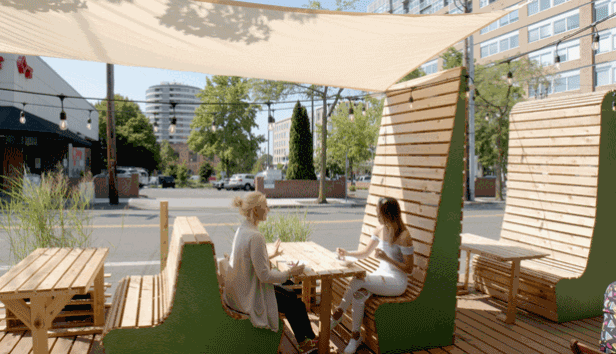
Photo courtesy of the City of Vancouver
A lot of attention has been appropriately focused on downtowns and how to maintain or revitalize their overall well-being.
A successful downtown can be defined as an important economic center, a community’s central gathering place, and/or a mixed-use/mixed-purpose location where commercial activity (such as restaurant and retail stores), residential uses, and recreational opportunities meld together into a unified, well-functioning, and inviting gathering place. Downtowns often serve as a visible barometer of the well-being of the entire city or town within which the downtown area is situated.
A recent MRSC blog on building belonging addressed how communities can combat the urban loneliness crisis, suggesting that developing inviting places where people want to go is one approach.
A 2023 article by the Social Life Project focused on five campaigns, or methods, to restore social life, noting “A placemaking strategy that begins with healthy public spaces is key to addressing many of the systemic issues and shared challenges in our society, including social isolation.”
This blog will build upon both articles and point out some specific approaches that cities and towns can take to make their downtowns more welcoming, attractive, and inviting.
Making Downtowns More Welcoming and Attractive
Steps that cities, towns, and their partners can take to address the vitality and well-being of their downtown include:
- Shift the focus from cars to people
- Provide adequate seating in public areas
- Activate the ground floor of buildings
- Focus on the town square and other major gathering spaces
- Maintain and care for public facilities
Shift the focus from cars to people
While most people travel to and back from downtown via some type of vehicle (e.g., automobile, bus, or bicycle), it is important to ensure that a pedestrian’s safety and ease of travel are kept ’front of mind’ once people have arrived and are walking within the central business district.
Suggested techniques include lowering speed limits on downtown local streets and installing pedestrian-oriented improvements (like clear signage and crossing signals) at street intersections.
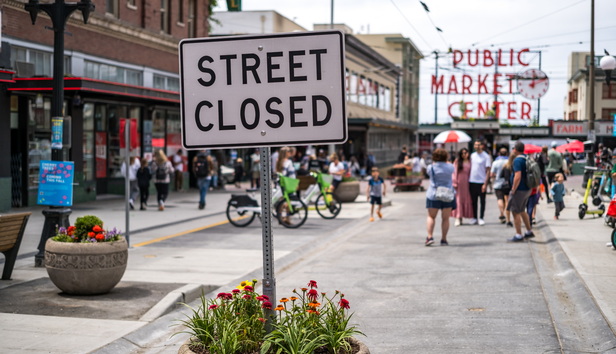
Wide sidewalks with street trees, other plantings (such as hanging flower baskets), and street furniture contribute to a pedestrian-friendly environment, and such improvements may have a relatively low cost, especially if the key infrastructure is already in place.
The City of Bremerton took a section of a downtown street and converted it into the community gathering, cultural, and event space, Quincy Square.
Provide adequate seating in public areas
A simple yet often overlooked principle to boosting the welcoming nature of any downtown is to provide opportunities for people to sit and linger. Public seating is an essential amenity if you want to attract people to your downtown and, importantly, have them stay for a longer period of time than they might otherwise do.
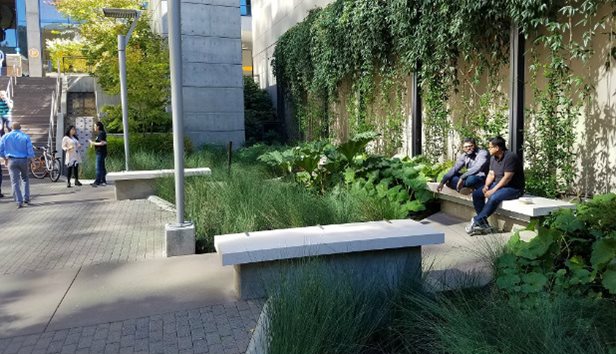
Photo courtesy of the author
Offering benches and other types of outdoor seating sends a positive ‘welcome’ message and makes the downtown environment usable and enjoyable for longer periods of time. Some cities have created sponsorships for individual benches as one funding mechanism for adding seating in public areas. The City of Bellevue and the Downtown Camas Association have programs in which individuals and organizations may donate a bench for public use.
Activate the ground floor of buildings
Historically, most downtown businesses, such as retail stores and restaurants, had large transparent windows through which people could look in (and out) of—the concept being that if people could see something happening inside the space that was enticing to them, they would be inclined to enter and patronize that business. This concept still applies today!
It is important that ground floor businesses have:
- large transparent windows, preferably those uncluttered with visually distracting signage blocking the view;
- attractive window displays;
- a clearly identifiable entrance; and
- an attractive and well-maintained front facade (This last item extends to the entire front of a building and is not just focused on the ground floor).
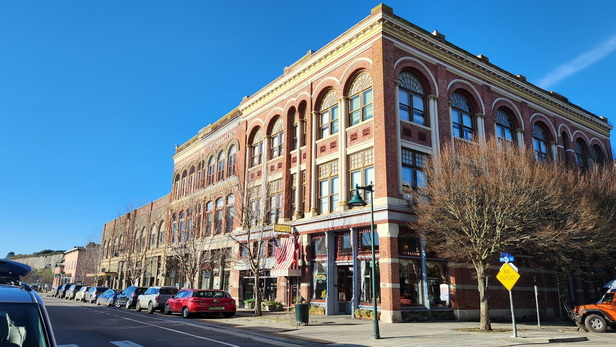
Photo courtesy of the author
Good examples from Washington cities include Auburn’s Façade Improvement Grant Program, Battle Ground’s Old Town Facade Improvement Grant Program, and the Ellensburg Downtown Association’s Business Revitalization Fund Program.
'Bringing the inside out/to the outside' is another concept that successful downtown businesses have long used. Examples include outdoor display areas for sales items brought out to sidewalks during business hours and outdoor seating patios/areas for restaurant and espresso shop patrons (of course, it helps if the weather is conducive to outside activities).
The number of restaurants/food establishments with outdoor dining/seating areas increased dramatically during the COVID-19 crisis; many of those parklets/streateries (i.e., restaurant seating or retail display areas that occupy curbside parking spaces, usually adjacent to a pedestrian-oriented business using them) continue to be used today in a post-pandemic world (see Continued Use of the Public Right-of-Way for Outside Dining for more details).
Focus on the town square and other major gathering spaces
Parks, plazas, and other types of public open space can serve as a significant catalyst to attracting people to your central business district/commercial core. A town square or other type of centrally located, major park/plaza can often serve and be considered as the heart of your downtown (or sometimes for your entire community).
These types of public gathering places are essential to maintaining the health and vitality of downtown because they provide inviting and welcoming places for people to gather, visit with one another, or just take a solitary respite. Some good examples include Vancouver’s Esther Short Park, Redmond's Downtown Park, and Washougal's Reflection Plaza.
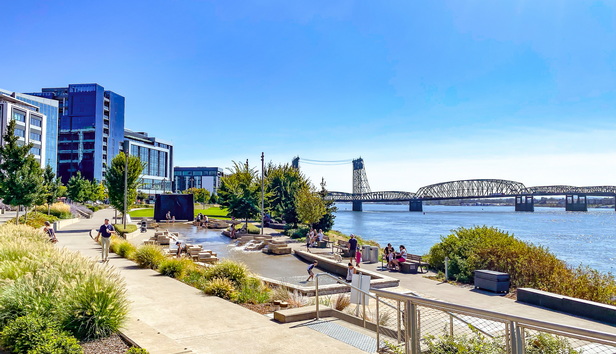
Key gathering spaces should be in high-visibility locations, and not in isolated locations with low pedestrian activity and poor visibility from sidewalks or adjacent buildings. Notably, such parks and plazas can be either publicly or privately owned, as long as the latter are accessible to the public during normal activity hours.
Public markets, such as weekly farmers markets and the occasional pop-up retail shop, will help enliven your public plazas and other major gathering spaces.
Maintain and care for public facilities
It is important that the ‘public realm’ of a downtown is regularly maintained and cared for. This translates into the need for regular street cleaning and repair, trash pick-up, landscape maintenance, watering of hanging flower baskets, etc.
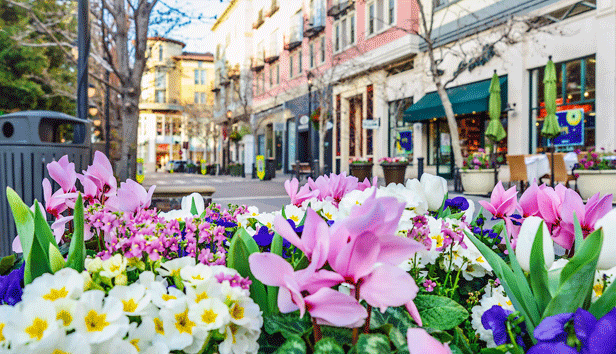
If a downtown looks neglected and rundown, it creates a strong and recognizable impression/image as an unwelcoming area that does not want visitors and people should go elsewhere—not the message a city or town wants to broadcast/project about its downtown.
Downtown maintenance programs can be either publicly or privately funded, with there being some examples of combined public/private/nonprofit partnerships (such as provided by Washington Main Street organizations and other types of downtown associations). Examples of programs that offer or organize landscaping, beautification, and/or clean-up services for downtown areas include the Edmonds Downtown Alliance, the Downtown Bellingham Partnership, and the Downtown Seattle Association’s Clean Team.
Conclusion
The importance of making downtowns inviting and attractive cannot be overstated. Major contributors to creating this type of welcoming environment include the physical elements mentioned in this blog—pedestrian-oriented sidewalks, a multitude of seating opportunities, activated ground floors of commercial buildings, and appealing ‘town square’ parks and other open spaces. And those facilities, be they publicly or privately owned, need to be in a constant state of good repair and condition.
By paying close attention to those types of physical and maintenance factors, your downtown is much more likely to meet its potential and serve as a positive centerpiece for the entire community.
MRSC is a private nonprofit organization serving local governments in Washington State. Eligible government agencies in Washington State may use our free, one-on-one Ask MRSC service to get answers to legal, policy, or financial questions.


