
Strengthening Urban Resilience to Wildfire at the Local Level
April 21, 2025
by
Alicia Bones
Category:
Emergency Management
,
Fire Protection
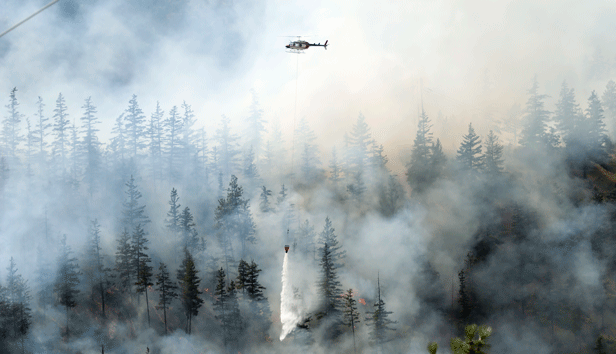
Like many parts of Washington state, Spokane County faces significant wildfire risks due to its proximity to wildland urban interface (WUI), where development and vegetation meet, and ongoing urban expansion.
Spokane County Emergency Management (SCEM) Deputy Director Chandra Fox points to the August 2023 Gray Fire, where a fire that started in the WUI rapidly spread into neighborhoods, as an example of this issue. This fire, which damaged over 250 structures and killed one person, demonstrates the need for both individual and collective wildfire mitigation tactics, especially as urban development continues in fire-prone areas.
“It starts at home,” says Fox. “People need to understand that there are many things they can do to help protect their property and reduce risk for everyone.”
Wildfire risk is not limited to eastern Washington. Across the state, wildfire seasons are getting worse, with the 1,884 wildfire ignitions in 2023 marking the second-highest number on record. The Washington State Department of Ecology suggests the state has becoming more vulnerable to wildfires because of rising temperatures, reduced snowpack, and drier conditions. In response to this growing concern, local government officials should take the following proactive steps identified by wildfire experts.
Local Governments Reducing Infrastructure Wildfire Risk
Guy Gifford, Manager of the Washington Department of Natural Resources’(DNR) Community Resilience Program, told me that prevention starts with understanding how quickly a fire can spread. A single spark can ignite flammable material next to a building, so it’s critical to manage vegetation and other fuels near structures.
Defensible space is divided into three zones, and each should be examined for risk:
- Zone 1 (0–5 feet): Eliminate all flammable materials. Keep this zone free of dead vegetation, dry planters, or wood piles.
- Zone 2 (5–30 feet): Maintain a “lean, clean, and green” area with trimmed shrubs and spaced-out trees.
- Zone 3 (30+ feet): Remove dead plant matter, thin brush, and reduce ladder fuels to prevent fire from climbing into tree canopies.
To manage their own structures, Gifford recommends local governments schedule Wildfire Ready Home Visits for their buildings and property. These free assessments help public agencies identify and reduce fire risks.
In addition to assessing risk before fire season hits, Gifford also suggests local governments monitor weather alerts (such as red flag warnings) and take immediate action to remove or secure agency-owned flammable materials that may be used on a regular basis. For instance, supplies used for maintenance tasks should never be left unattended during potentially dangerous fire days.
Engage Communities Through Outreach
Local agencies can support awareness through public education. Gifford recommends inviting DNR staff to present at community events. These concise presentations can be tailored to different groups, from neighborhood associations to master gardeners.
Effective outreach can also drive community action. Local governments should use social media campaigns, align messaging with preparedness months, and coordinate with fire districts and emergency management agencies to ensure community members receive consistent and actionable information, Gifford suggests.
Tools such as canned messages or template outreach materials also make it easier for jurisdictions to engage the public and increase overall awareness. These efforts can also help cultivate prepared individuals, who play a critical role in both prevention and emergency response.
Adopt and Align with Wildfire Codes
Updating codes and plans is another way local governments can reduce wildfire risk.
Spokane County is currently updating its Community Wildfire Protection Plan (CWPP). According to Fox, the plan is a community-focused document that reflects input from fire agencies, DNR, and the public. The update includes outreach events and an online survey to gather community feedback and raise awareness.
Dustin Curb, Managing Director of the Washington State Building Code Council, emphasizes the importance of reviewing and aligning local codes with the state’s Wildland Urban Interface (WUI) code as well. He suggests:
- Reviewing what's in the model code
- Considering how it applies to local jurisdictions
- Identifying any implementation challenges
- Planning for upcoming statewide wildfire risk mapping, expected by 2026
By staying engaged in code adoption and planning discussions, local governments can ensure that their needs are considered, and that community infrastructure is better protected against wildfires.
Plan Collaboratively Across Agencies
In Spokane County, SCEM works closely with fire agencies and the DNR not only to fight fires but also to offer site assessments, recommend fuel reduction tactics, and promote home-hardening strategies. Fox urges agencies to begin planning now — not after a disaster — and to leverage both existing and new partnerships.
“Relationships with our partners are absolutely key,” says Fox. “There are so many components to preparedness and wildfire mitigation — one or two agencies alone cannot manage all of the different aspects. It has to be a cooperative and collaborative effort.”
Final Thoughts: Building a Culture of Preparedness
As wildfire seasons become more severe across Washington, local governments have a critical role in reducing risk and building community resilience. Proactive strategies — like maintaining defensible space, adopting fire-safe codes, using wildfire readiness assessments, and engaging the public — can make a measurable difference.
With coordinated planning, strong communication, and interagency collaboration, local leaders can help ensure that communities are safer and better prepared for the wildfire seasons ahead.
Interested readers can register for our free webinar, Tools for Wildfire Preparation and Response, which will be held from 10-11:30 AM on May 28, and will feature speakers from DNR as well as local jurisdictions that have experienced wildfire and how this has changed their approach to preparing for and responding to future events.
MRSC is a private nonprofit organization serving local governments in Washington State. Eligible government agencies in Washington State may use our free, one-on-one Ask MRSC service to get answers to legal, policy, or financial questions.


