
How Can Local Governments Prepare for Data Centers?
August 12, 2026
by
Leonard Bauer
Category:
Development Regulations and Zoning
,
Revenues
,
Utilities
,
Land Use Administration
,
Rural Uses
,
Artificial Intelligence
,
Economic Development
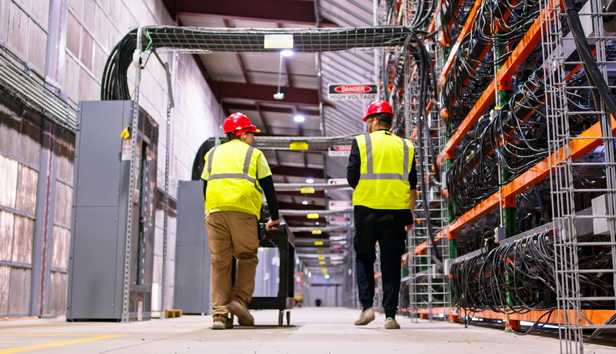
Washington is home to approximately 130 data centers, 10th-highest of any US state. As proposals for large data centers continue to increase, Washington local governments face major policy challenges. Data center permit processes can become a flashpoint for public controversy over the use of artificial intelligence (AI) and the power of large tech companies.
Data centers have become essential infrastructure to serve the growing demand for digital services. They provide significant tax revenue and economic development to the local communities that host them, but they also use a large amount of electricity. As of 2024, data center electricity usage was about 6% of the state's total. They also have other impacts local communities should consider.
This blog is part two of a two-part series on how local governments can prepare when faced with large data center proposals. Part One summarized some of the benefits and costs to local governments, and how state policy is evolving. This blog will describe planning and regulatory approaches local governments have taken to address data centers, as well as some long-term issues to consider.
Understanding Data Centers and Their Impacts
There are different types and sizes of data centers, and their impacts vary. Small to mid-sized data centers have existed for many years, but more recently, industry trends show a sharp increase in demand for very large (i.e., hyperscale) data centers.
Hyperscale data centers are often owned and operated by global technology corporations that offer high-capacity computing and AI platforms. The increased demand has also led to large colocation centers, which are constructed to lease server space to multiple tenants.
Hyperscale centers are the largest energy users of all types of data centers, but energy usage and efficiency varies significantly depending on center design and the type of cooling system used. Data centers may install water- or air-cooling systems, or a combination of both, and the size and efficiency of these systems affects water and electricity use.
Job creation varies by the type of data center. Hyperscale data centers generate long-term tech industry jobs, especially when they are built in clusters. A typical large data center directly employs over 1,600 temporary construction workers and about 150 permanent employees. Colocation centers generally do not create many jobs because they typically lease server space to remote clients.
Preparing for Big Data Center Proposals
In considering how to prepare for data centers in existing communities, planning for land use, economic development, and utilities must be integrated into a cohesive approach. Cities, towns, and counties must have strong relationships with their local electricity and water providers to address concerns (impacts on air and water quality, noise, waste heat, transportation) and local and regional economic development agencies to address potential benefits (jobs, tax-related income).
For example, Prince William County, Virginia, studied other jurisdictions’ approaches to data centers and defined a list of topic areas where additional regulation could be considered. The result was adoption of a Data Center Opportunity Zone Overlay District and other regulations and standards administered by various county departments.
Washington local governments have pursued a variety of strategies to address data centers. Examples of some of these strategies are described below.
Moratoria on development
Several Washington cities and counties have recently adopted temporary moratoriums on large data center development, as noted on our AI policies and resources webpage, and more are considering them.
Zoning regulations
Some jurisdictions, such as the examples below, have adopted zoning regulations to address where and how data centers may be located:
- Airway Heights Municipal Code Ch. 12.19 – Noted as a commercial, industrial land use for the purposes of transportation impact fees
- Chelan County Code Ch. 14.98.498 – Defined and allowed as a permitted use in rural industrial (Ch. 11.26) and rural public lands and facilities (Ch. 11.28) zoning districts.
- Lewis County Code Ch. 17.142.102 – Allowed in two industrial zoning districts with provisions related to noise, vibration, lighting, and building facade.
- Longview Municipal Code Ch. 19.58.085 – Permitted in all industrial zoning districts, but cryptocurrency and similar facilities not allowed as part of a data center.
- Milton Municipal Code Ch. 17.08.240 and 17.14.010 – Prohibited in all zoning districts.
- Quincy Municipal Code Ch. 20.40 – Allowed with a conditional use permit in B-D and L-I zones and as a permitted use in G-I zones.
- Renton Municipal Code Sec. 4-11-040 – Limited to 200,000 square feet and included in the code section addressing warehousing.
- Tukwila Municipal Code Ch. 18.06.454 – Defines “internet data/telecommunications center” and permits them in seven commercial/industrial zoning districts (see the Data Center Regulations handout).
- Warden Municipal Code Sec. 17.06.010 – Defines “data center, server farm and clusters” and includes as a “high energy use intensity.” Sec. 17.40.030 allows server farms in industrial zones, subject to specific standards, including written verification from Grant County Public Utility District (PUD) that the proposed development meets PUD requirements.
MRSC’s AI Policies and Resources for Local Governments webpage includes an extensive section on data center considerations, including example ordinances, codes, and moratoria adopted by Washington agencies. Additionally, the National League of Cities offers fact sheets summarizing potential strategies and environmental considerations.
Using data center revenue for public benefit
As described in Part One, Quincy used data center tax revenues to fund infrastructure improvements and other public amenities. Other jurisdictions have funneled data center revenue into programs and activities to benefit local communities.
For example, Henrico County, Virginia created a $60 million affordable housing trust fund using data center revenues and plans to construct 150 homes per year for moderate-income homebuyers. A coalition of jurisdictions in Texas is discussing public benefits agreements with data center developers to fund broadband expansion to rural areas, as well as other public benefits.
Some data centers have funded systems to capture waste heat and use it to heat other buildings, sometimes called district heating. For example, Amazon’s Seattle headquarters are entirely heated by waste heat from a nearby data center. Local governments could negotiate agreements with data centers to provide district heating systems for public buildings or other facilities.
Planning for the full life cycle
Local governments should plan for data centers to eventually close, and agreements with developers should include measures to address the impacts of closure.
There are several helpful lessons from the experiences of communities which once hosted nuclear facilities that are now closed. Such lessons include:
- Requiring the facility give adequate notice (e.g., one year) of a planned closure.
- Including a phaseout of tax payments over a year or more, and lump sum payments to assist with economic development planning to offset revenue gaps.
- Defining what steps are required when a facility closes to make it marketable for a future use, such as transitioning single-purpose infrastructure (A trust fund established during data center operation could pay for these steps.)
- Investing in education and training to expand and diversify the regional tech industry. Economic diversification can help mitigate the impacts of a major data center closure.
Policies for utilizing data centers
Local governments are significant users of data, with many utilizing web-based applications (powered by data centers) to provide services. Seattle Municipal Code 3.23.050 is an example of a local policy related to agency use of data center space and services.
Engaging the Community in the Discussion
Local public discussion and engagement around data centers is often controversial. Some data center developers may pursue confidentiality agreements while negotiating with local officials, which increases distrust among community members.
Developers may be negotiating with electric or water providers separately from a city, town, or county, complicating (and possibly confusing) the process. Close coordination between utilities and localities can help avoid such confusion and present a unified public communication strategy.
The Community Engagement Handbook for Artificial Intelligence from the GovAI Coalition offers guidance on how to conduct community outreach related to AI initiatives/issues. For more general information about community engagement approaches, see MRSC’s Community Engagement Resources page.
Conclusion
For cities, towns, and counties, data centers are not just an industrial zoning question. They create impacts across growth management, utility governance, economic development, climate policy, water stewardship, and public trust. Cities, towns, counties, and utilities within a region receiving a data center proposal should coordinate with each other to comprehensively address all these issues. Data center agreements with the developer can mitigate negative impacts and enhance public benefits.
Looking for more information? Join our upcoming webinar Preparing for Large Data Centers: Insights from Local Governments on Tuesday, August 25 from 10 – 11:30 AM, to learn how Quincy, Tukwila, and Spokane have hosted or considered data center projects.
MRSC is a private nonprofit organization serving local governments in Washington State. Eligible government agencies in Washington State may use our free, one-on-one Ask MRSC service to get answers to legal, policy, or financial questions.

About Leonard Bauer
Leonard Bauer has over 35 years of public service experience in planning and community development.
He worked for MRSC from 2024 through fall of 2026 as a planning consultant. Prior to that he was the community planning and development director for Olympia for 10 years. He also served the Cities of Sumner and Tumwater, a regional council of governments in Eugene, OR, and the Washington State Growth Management Services Office at the Department of Commerce.
Leonard is writing as a guest author. The views expressed in guest columns represent the opinions of the author and do not necessarily reflect those of MRSC.


