
From Vacant to Vibrant: Transforming Empty Downtown Storefronts
June 4, 2025
by
Steve Butler
Category:
Downtown Revitalization Series
,
Economic Development
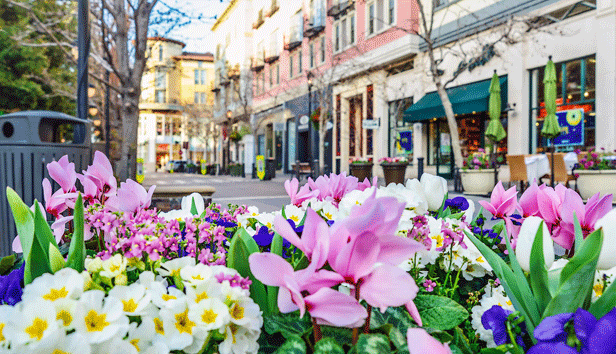
In recent years, several cities across Washington State have been grappling with the challenge of revitalizing their downtown areas. There are various factors that can negatively affect the vitality of a downtown, many of which have been described in MRSC’s downtown revitalization blog series. Economic shifts and the rise of online shopping have led to a decline in downtown retail activity and, for some central business districts, an associated increase in empty storefronts.
The presence of even a small number of vacant storefronts can have a major impact on how people, both local community members and visitors/tourists, perceive a downtown’s health/vitality. Empty retail establishments also represent a decrease in sales tax revenues and local jobs. For those reasons and others, several cities in Washington have successfully used a number of different strategies to address the problematic issue of vacant buildings, breathing new life into their downtowns.
Pay Attention to Building Maintenance and Appearance
Establishing a vacant building registration program with associated maintenance/upkeep requirements is one approach a local government can use to help ensure that the condition of empty buildings located downtown is maintained at a certain minimum level. The cities of Bremerton and Medical Lake both have a registration program for unoccupied commercial space in their downtowns.
It is important to keep vacant storefront windows open and inviting. Several cities have minimum standards for active storefront windows and transparency, such as in the Bellingham Municipal Code (see Subsection 20.25.270.B.2.c).
A few communities have expanded their code requirements to not allow vacant storefront windows to be boarded up or otherwise obscured. For example, Medical Lake’s window display requirements apply for commercial space that is unoccupied for more than 30 days.
Use Window Displays to Activate the Streetscape
Some cities have helped establish and/or support programs that encourage displays in the front windows of vacant storefronts to provide some visual interest to passers-by.
The Chehalis Storefront Art Project, which is a partnership between the City of Chehalis, the Chehalis Community Renaissance Team (CCRT), ARTrails of Southwest Washington, and other organizations coordinates short- and long-term art exhibits in empty storefronts throughout the Chehalis area.
The Aberdeen Art Center (Center) operates an innovative Downtown Phantom Galleries program, which places art in the windows of vacant downtown buildings, with the displays changing on a quarterly basis. The Center hangs the artwork, cleans the storefront windows, and provides signage about the art selected for display. One of the first phantom galleries the Center organized has since been converted into an actual art gallery.
Allied Arts of Whatcom County also works to activate vacant storefronts by partnering with the Downtown Bellingham Partnership on Creative Spaces, a juried show of temporary art exhibits and installations in windows of vacant buildings along Cornall Avenue (a major thoroughfare in the city’s central business district).
Finally, Window/Dressing, a program operated by the nonprofit Terrain Spokane, installs work by artists in vacant building windows throughout the city.
Encourage Pop-Up Shops and Other Temporary Uses
When it is not possible to fill up a vacant downtown storefront with an active business on a permanent basis, another option to consider is the temporary use of the space. Seattle Restored, which receives some funding from the City of Seattle, collaborates with property owners and local artists to install temporary window art displays in empty storefronts and facilitate the use of vacant space with pop-up activities.
From October–December 2022, the Wenatchee Downtown Association (WDA) successfully organized a temporary pop-up holiday market in a vacant first-floor commercial space in the downtown. The property owner offered use of the building, a local bank donated lighting and a Wi-Fi hotspot, and WDA took the lead in vetting pop-up businesses and making sure the shop was opened and closed each day. The Wenatchee Valley Chamber of Commerce and the local small business development center also offered resources for businesses interested in expanding or opening a storefront.
The benefits of sponsoring Weantchee's pop-up holiday market were twofold: the large indoor commercial space that housed the market was protected from early winter elements, and the market highlighted the advantages of the commercial building to potential buyers/tenants. (In a good news postscript, I should note that the once vacant downtown space is now occupied.)
A small rural community with vacant downtown buildings should consider exploring the Smithsonian Institution’s Museum on Main Street program, which offers traveling exhibits and educational programming focused on the small-town experience to small and rural communities nationwide.
Allow Additional Land Uses in Downtown Zones
Another approach that some cities have taken is reviewing their zoning codes and then expanding the types of land uses/businesses allowed in downtown zoning districts.
Some cities changed their zoning codes to allow small scale/”micro” manufacturing/food production in downtown and other zoning districts (some of which happened during the COVID-19 pandemic). Mountlake Terrace calls it “artisan manufacturing,” while Port Townsend uses the terms “artisan cheesemaking,” “micro distillery,” and “micro winery.”
If it is a small-scale craft manufacturing space in a downtown area, then local regulations could encourage (or even require) that the front of the commercial building have a small retail area where people could buy the produced goods.
Another type of code revision would broaden the types of commercial uses that are allowed on a temporary basis, such as pop-up shops (described earlier in this blog).
Collaborate/Partner with Other Organizations
Local government should actively consider partnering with local organizations, such as chambers of commerce and downtown associations, when strategizing about how to fill vacancies in downtown areas. One example already featured in this blog is the WDA, which hosts n annual program of activities and events to promote Wenatchee’s central business district to locals and out-of-town guests. WDA also provides access to some business assistance programs and organizes the annual Possibilities Tour, a free guided tour of retail and commercial space available for lease or sale in downtown Wenatchee.
Another example is Spaceworks Tacoma, which was created by the City of Tacoma and the Tacoma/Pierce County Chamber of Commerce. This program promotes public art installations (including in vacant storefronts) and runs a business incubator to encourage and assist new entrepreneurs.
There are numerous other examples of similar downtown associations throughout the state, many of which are associated with the Washington State Main Street Program.
Conclusion
Filling downtown’s vacant storefronts and commercial spaces with vibrant and commercially viable businesses is a vexing and challenging issue for local government. Unfortunately, there is not one “golden” solution or answer that will work in every case, but considering the options described in this blog may be a good place to start.
The author would like to thank the following people for their assistance with this blog: Rosa Pulido, Executive Director, Wenatchee Downtown Association; and Abby Newbold, Public Policy Intern, MRSC.
MRSC is a private nonprofit organization serving local governments in Washington State. Eligible government agencies in Washington State may use our free, one-on-one Ask MRSC service to get answers to legal, policy, or financial questions.


